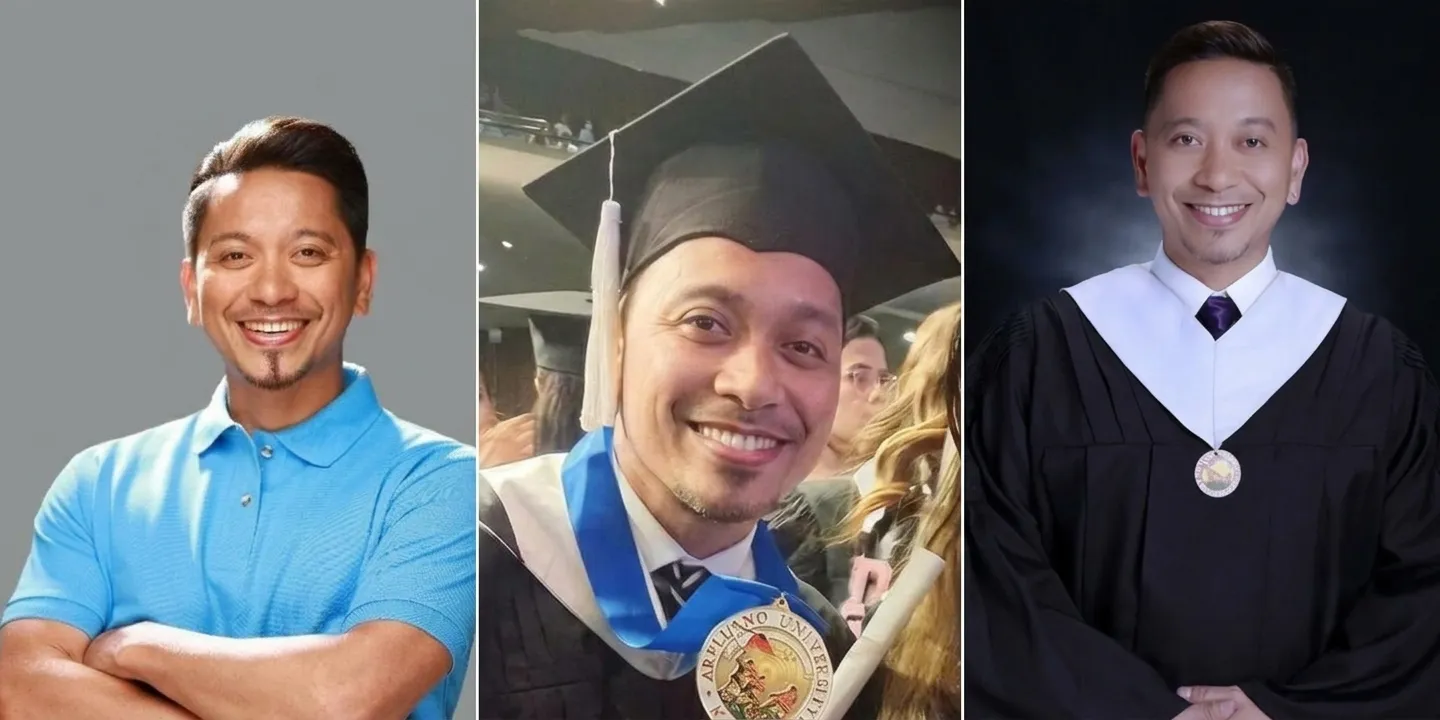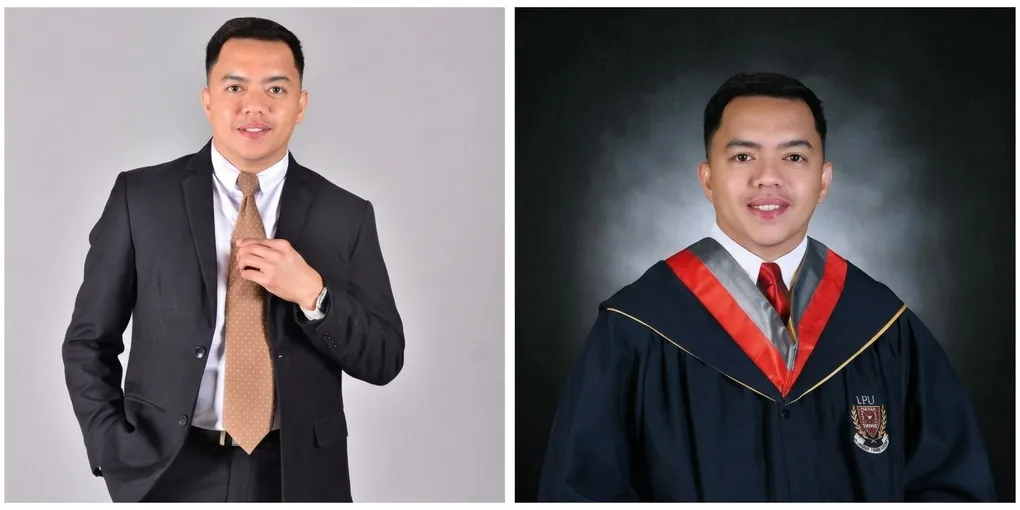
From the Frontlines of Fast Food to the Stage: Nikko Seno's ETEEAP Story at LPU Batangas
Some dreams do not arrive on schedule. They follow a different kind of timeline, one shaped not by semesters and academic calendars, but by years of work, sacrifice, and a quiet, stubborn refusal to let go.
That is exactly the kind of timeline Nikko C. Seno lived.
On June 2026, Nikko crossed the stage as a graduate of the Expanded Tertiary Education Equivalency and Accreditation Program (ETEEAP) at Lyceum of the Philippines University (LPU) Batangas. It was a moment he had prayed for, worked toward, and at times honestly doubted would ever come. But it came. And when it did, so did everything he had been carrying all those years.
In This Article
- Eight Years Behind the Counter
- A Microphone, a Dream, and a Gap
- Finding ETEEAP in Batangas
- What the Program Actually Looked Like
- The People Who Carried Him Through
- What This Degree Actually Means
- A Word for Anyone Still Waiting
Eight Years Behind the Counter
Before the spotlight, there was the service counter.
Nikko spent nearly eight years in the fast food industry, working his way through Jollibee branches in Caedo, SM, Rizal, and Burgos. That might sound like a detour from a college degree, but look closer and you see something else entirely: discipline, leadership, customer service, and the kind of operational knowledge that no classroom syllabus can fully replicate.
Fast food is unforgiving in the best way. You learn to manage people under pressure. You learn systems, logistics, and how to keep a smile on even when everything behind the counter is running at full speed. Nikko was not just clocking in and clocking out. He was building a professional foundation, even if he could not yet call it that on paper.
The industry shaped him. And it also, quietly, became the evidence he would later present to an ETEEAP panel of assessors.
A Microphone, a Dream, and a Gap
Somewhere along the way, Nikko discovered hosting. Not just the casual emceeing that many professionals fall into, but a genuine calling. He built a career as a professional events host, earning the trust of clients across different occasions and becoming the kind of speaker people hire again and again.
He also moved through roles in retail and financial services, joining the Abenson Nuciti family and later building a career with Home Credit Philippines. He climbed from Sales Associate to District Sales Supervisor, earning the confidence of managers and regional officers who saw something in him worth developing.
By any measure, Nikko was succeeding. His professional life was rich, layered, and full of real achievement.
But there was still a gap. And he knew it.
A college degree was the one milestone that kept sitting just out of reach. Not because he lacked the ability, but because life had asked him to prioritize other things first: work, responsibilities, family, survival. The years passed. The dream did not disappear, but it started to feel like something that belonged to a different version of himself, a younger one with fewer obligations.
That feeling is familiar to millions of Filipino professionals. And it is exactly the feeling that ETEEAP was designed to answer.
Finding ETEEAP in Batangas
The turn came when Nikko connected with cousins in Batangas. It was through them that he discovered the LPU Batangas ETEEAP program and realized that his lifelong dream might actually be within reach after all.
This is how ETEEAP often works. Not through a government billboard or a formal announcement, but through a conversation, a referral, a cousin who happened to know someone who knew about the program. The information spreads person to person, community to community, and when it lands at the right moment, it lands hard.
ETEEAP, institutionalized under Republic Act No. 12124, is a government-backed alternative education pathway that allows working professionals to earn a CHED-recognized college degree based on prior learning and demonstrated work experience. It is not a shortcut. It is a rigorous assessment process that evaluates what you actually know and what you have actually done. Check if you qualify here.
To apply, Nikko would have needed to meet the program’s basic eligibility criteria: at least 23 years old, a completed secondary education, and a minimum of five years of work experience in a field related to the degree program being pursued. His years in the service industry, sales, and events hosting more than covered that ground. The documentation, the portfolio, the panel assessment: all of it was work, but it was work that pointed directly at what he had already spent years proving on the job.
He applied. He was accepted. And he began.
What the Program Actually Looked Like
ETEEAP is not a passive experience. Students like Nikko go through a multi-stage assessment process conducted by deputized HEIs like LPU Batangas, which has the CHED-granted authority to evaluate applicants and award appropriate academic degrees.
The assessment typically includes a thorough portfolio evaluation, written examinations, practical demonstrations, and an oral defense before a panel of internal and external assessors. The panel looks at everything: your work history, your competencies, your decision-making track record, your professional growth. They are not just looking at what you have done. They are looking at whether what you have done meets the standards of a college degree.
Where gaps exist between a candidate’s prior learning and the curriculum requirements of the program, the deputized HEI prescribes competency enrichment. These are the additional academic requirements, coursework, or research papers that complete the picture. Nikko went through all of it, including a thesis with groupmates who became part of his story.
The degree he earned at the end of that process is the same qualification awarded to any other graduate of the institution. Recognized by CHED. Valid for licensure examinations where applicable. Accepted by employers. And, perhaps most importantly, real.
The People Who Carried Him Through
One of the most striking things about how Nikko told his story was the gratitude. Not a passing mention, but a deep, deliberate accounting of every person who contributed something to the journey.
His parents, far away but never absent in spirit. His cousins in Batangas, whose knowledge of the program changed everything. His Jollibee family across four branches. His Burgos SMART and Caedo circles. His Abenson Nuciti colleagues and officers. His Home Credit managers, who believed in his potential even on the days he did not.
His best friend. Even his fur babies, Bon and Cooper, who showed up on the hard days.
And his thesis groupmates, who shared a chapter of the journey that only those who have been through a panel defense together can truly understand.
He saved a specific kind of gratitude for the Director, professors, faculty, and staff of the LPU Batangas ETEEAP program. These are the educators who make the program work in practice: the assessors who read the portfolios, the advisers who guide the enrichment programs, the administrators who process the paperwork, and the professors who treat returning adult learners not as exceptions to the system but as the very people the system should have always been designed to serve.
ETEEAP at its best is not just a bureaucratic process. It is a community of educators who believe that the years you spent outside the classroom have value.
What This Degree Actually Means
Nikko described his degree as representing more than academic achievement. It represents years of perseverance, resilience, faith, sacrifice, growth, and the fulfillment of a promise he made to himself long ago.
That is not just personal sentiment. It is an accurate description of what an ETEEAP degree is.
Under the Philippine Qualifications Framework, the degree earned through ETEEAP is assessed against the same Level 6 competency standards as a conventional baccalaureate degree. The path was different. The rigor of evaluation was just as real. Employers who understand the program know this. Government agencies that recognize ETEEAP degrees for civil service eligibility purposes know this too.
For Nikko specifically, the degree is also a professional credential that formally backs a career he has been building for years. As an events host, as a sales professional, as someone who has led teams and managed relationships in multiple industries, having a diploma now on record gives that career an entirely new dimension of credibility.
It is the piece of paper, yes. But it is also proof of something larger: that what you do with your life matters, even when a university does not stamp it first.
A Word for Anyone Still Waiting
Nikko ended his story with a message, and it is worth repeating here.
“To anyone still chasing their dreams: keep going. Your path may not look the same as everyone else’s, and your journey may take longer than expected, but that doesn’t mean you’re failing. Every small step matters. Keep believing. Keep working. Keep praying. Your breakthrough will come at the right time.”
That is the essence of why stories like his matter. Not just for the person living them, but for the person reading them at 11pm after a long shift, wondering if it is too late to start.
It is not too late. Nikko’s story, and the stories of thousands of other ETEEAP graduates, are proof of that.
Are you a working professional who has been carrying the idea of a college degree for longer than you expected? The ETEEAP program may be the pathway that was always meant for you. Check if you qualify, browse CHED-deputized schools near you, or explore the programs available through ETEEAP. Your experience already has value. The next step is making it official.
This story is based on a personal account shared publicly by Nikko C. Seno. Photo credit: Nikko C. Seno.