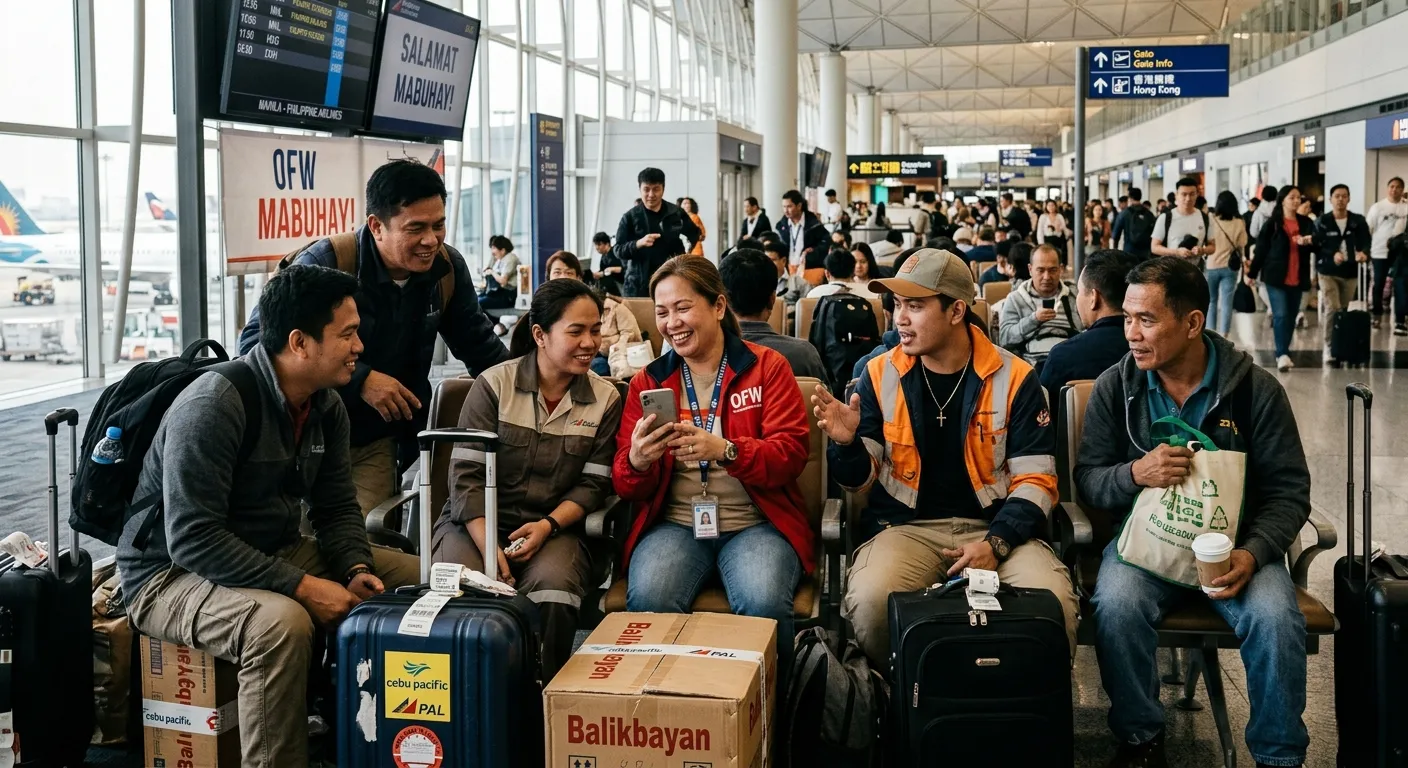
OWWA to Fund ETEEAP Scholarships for OFWs
For thousands of Overseas Filipino Workers, years abroad have meant one thing above all else: sacrifice. Long hours, time away from family, and careers built entirely on raw skill and determination, often without the piece of paper that formal education is supposed to provide. That may be about to change in a very meaningful way.
The Overseas Workers Welfare Administration (OWWA) has announced a new scholarship program that will fund eligible OFWs who want to earn a college degree through the Expanded Tertiary Education Equivalency and Accreditation Program (ETEEAP). The partnership, formalized with the Commission on Higher Education (CHED), creates a direct funding pathway for workers who have the experience but never had the opportunity or financial means to formalize it into a recognized credential.
What Is the LEAP-OFWs Program?
The initiative is called the Lifelong Learning Education Assistance Program for OFWs, or LEAP-OFWs. Under this arrangement, OWWA provides educational assistance or scholarship grants to qualifying OFWs who wish to pursue a college degree through ETEEAP.
OWWA Administrator Patricia Yvonne Caunan highlighted the program’s purpose by pointing to OFWs working in Saudi Arabia’s engineering sector as a prime example of who this is designed for: skilled workers with over a decade of hands-on engineering experience, yet without a formal engineering degree to show for it. Through ETEEAP, that accumulated experience can now be formally assessed and credited toward a recognized college degree in as little as six months to two years.
The administrator also pointed out a significant downstream benefit: once a degree is earned, workers in regulated fields like engineering become eligible to take Professional Regulation Commission (PRC) licensure examinations, opening the door to professional recognition both in the Philippines and abroad.
Why ETEEAP Makes Sense for OFWs
ETEEAP was built with working professionals in mind, and OFWs are perhaps the most compelling case for the program’s existence. The ETEEAP framework recognizes learning gained from work experience, non-formal training, and prior education, then maps it against the competencies required for a bachelor’s degree curriculum.
This is not a shortcut. The program involves a rigorous multi-stage assessment: a comprehensive portfolio review of your work history, written examinations on theoretical foundations, practical demonstrations where applicable, and a panel interview with academic deans and industry experts. If gaps are identified between your experience and the full degree curriculum, you complete targeted enrichment modules rather than repeating what you already know.
The result is a fully CHED-recognized college degree, identical in standing to one earned through the traditional four-year classroom route. It qualifies graduates for employment, government service, salary adjustments, promotions, and professional licensure examinations.
For OFWs specifically, OWWA believes this outcome will strengthen their standing both while working abroad and upon returning home. A degree opens doors to promotions in their current roles and to better career opportunities when they eventually come back to the Philippines.
Who Qualifies for ETEEAP?
Before you can benefit from the OWWA scholarship, you need to meet the basic ETEEAP eligibility requirements. According to ETEEAP.PH’s qualifications guide, you must be:
- A Filipino citizen (including those working overseas)
- At least 23 years old
- A high school graduate, ALS completer, PEPT passer, or college undergraduate
- In possession of at least 5 years of relevant work experience related to the degree you wish to pursue
That last point is crucial. Your work experience must genuinely align with the degree program. An OFW who spent ten years as a construction supervisor in the Middle East, for instance, would be a strong candidate for a degree in Civil Engineering Technology or Construction Management. An experienced domestic worker with years of caregiving experience could potentially pursue a degree related to health services or household management, depending on what programs are available at deputized schools.
The specific financial eligibility criteria for OWWA’s LEAP-OFWs scholarship will be determined by OWWA itself. OFWs interested in the program should reach out to their nearest OWWA office or the ETEEAP office of a CHED-deputized school to confirm both their academic and financial eligibility.
The Documents You Will Need
One of the most important things any OFW can do right now, even before the scholarship details are fully rolled out, is to begin gathering documentation. The strength of your ETEEAP application depends heavily on how well you can prove and articulate your work history.
Typical requirements include certificates of employment from all previous employers, detailed job descriptions, project reports or accomplishments, performance evaluations, relevant training certificates, and letters of recommendation from employers or supervisors. You will also need your secondary education credential, a PSA birth certificate, and valid government-issued ID.
You can use ETEEAP.PH’s Get Started page to walk through a quick eligibility checklist and understand which documents you will likely need to prepare for your application.
A Degree That Opens Real Doors
It is worth taking a moment to understand what an ETEEAP degree actually does for you after graduation, because the benefits are substantial and practical.
In government employment, salary grades are tied directly to educational attainment. A college degree can unlock higher salary classifications that were previously off-limits. In the private sector, many managerial and supervisory roles require a degree as a baseline qualification, regardless of how many years of experience a candidate brings. For those in technical fields, a degree is often the legal gateway to sitting for PRC board examinations, which in turn unlock higher professional standing and often significantly higher income.
For OFWs who return home, this credential can be the difference between finding themselves back at the bottom of the hiring ladder and stepping directly into the roles their experience truly qualifies them for.
Next Steps for Interested OFWs
If you are an OFW and this program sounds relevant to you, here is where to start:
Check your basic eligibility. Use the ETEEAP eligibility checker on ETEEAP.PH to get a quick sense of where you stand.
Identify your target degree. Browse the ETEEAP programs directory to find a degree that genuinely reflects your work experience.
Find a deputized school. Not all schools offer ETEEAP, and schools differ in the programs they provide. The Accredited Schools page lists CHED-authorized institutions, including those that offer support for OFWs and online or flexible learning arrangements.
Contact OWWA. Reach out to your nearest OWWA office to confirm your eligibility for the LEAP-OFWs financial assistance and understand the application process on the scholarship side.
Start gathering your documents. Do not wait. Employment certificates, project records, and training certificates can take time to collect, especially when previous employers are overseas. Begin as early as possible.
The partnership between OWWA and CHED represents a recognition of something that OFWs have long known: that experience is real learning, and it deserves real recognition. For workers who spent years building skills abroad while watching a degree remain just out of reach, this program may finally close that gap.