OWWA and CHED Sign MOA to Help OFWs Earn College Degrees Through ETEEAP
For millions of Overseas Filipino Workers, years spent working abroad often come with a quiet frustration: all that skill, all that experience, and still no diploma to show for it at home. The government has now taken a concrete step to close that gap.
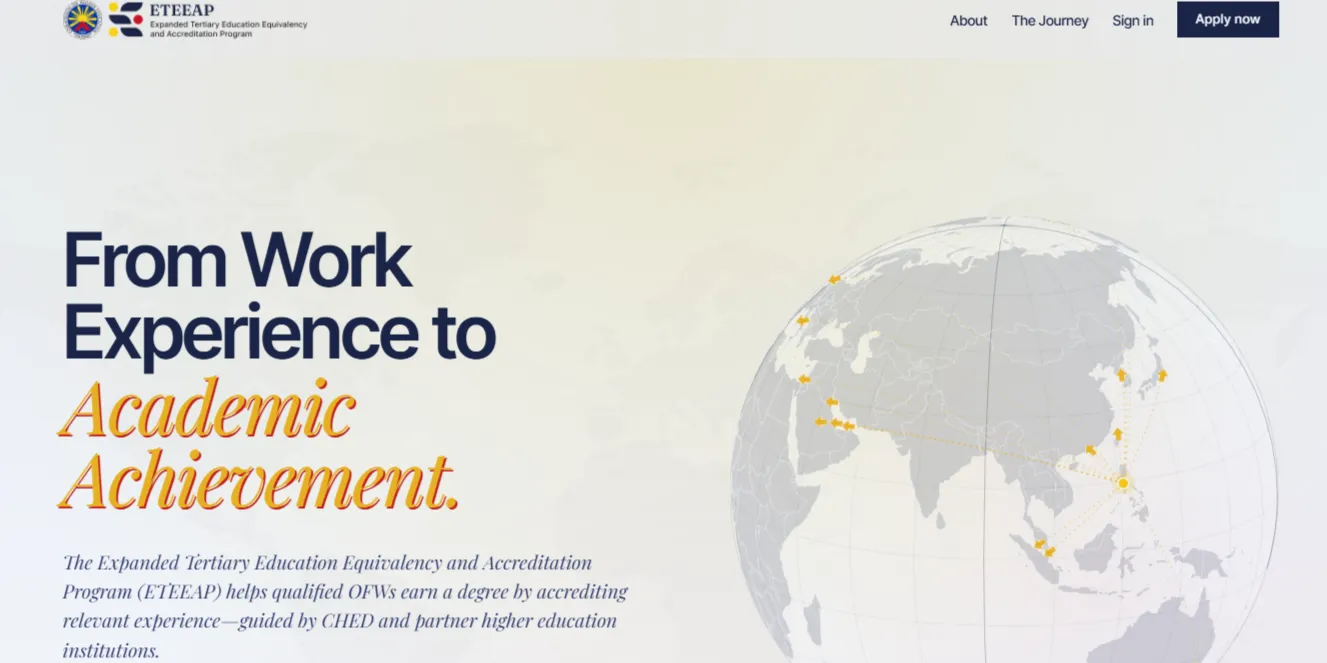
The Overseas Workers Welfare Administration (OWWA) and the Commission on Higher Education (CHED) have signed a memorandum of agreement (MOA) in Quezon City to formally launch the Lifelong Learning Education Assistance Program for OFWs, or LEAP-OFWs. The partnership funds qualified OFWs who want to earn a recognized college degree by converting their work experience into academic credits through the Expanded Tertiary Education Equivalency and Accreditation Program (ETEEAP).
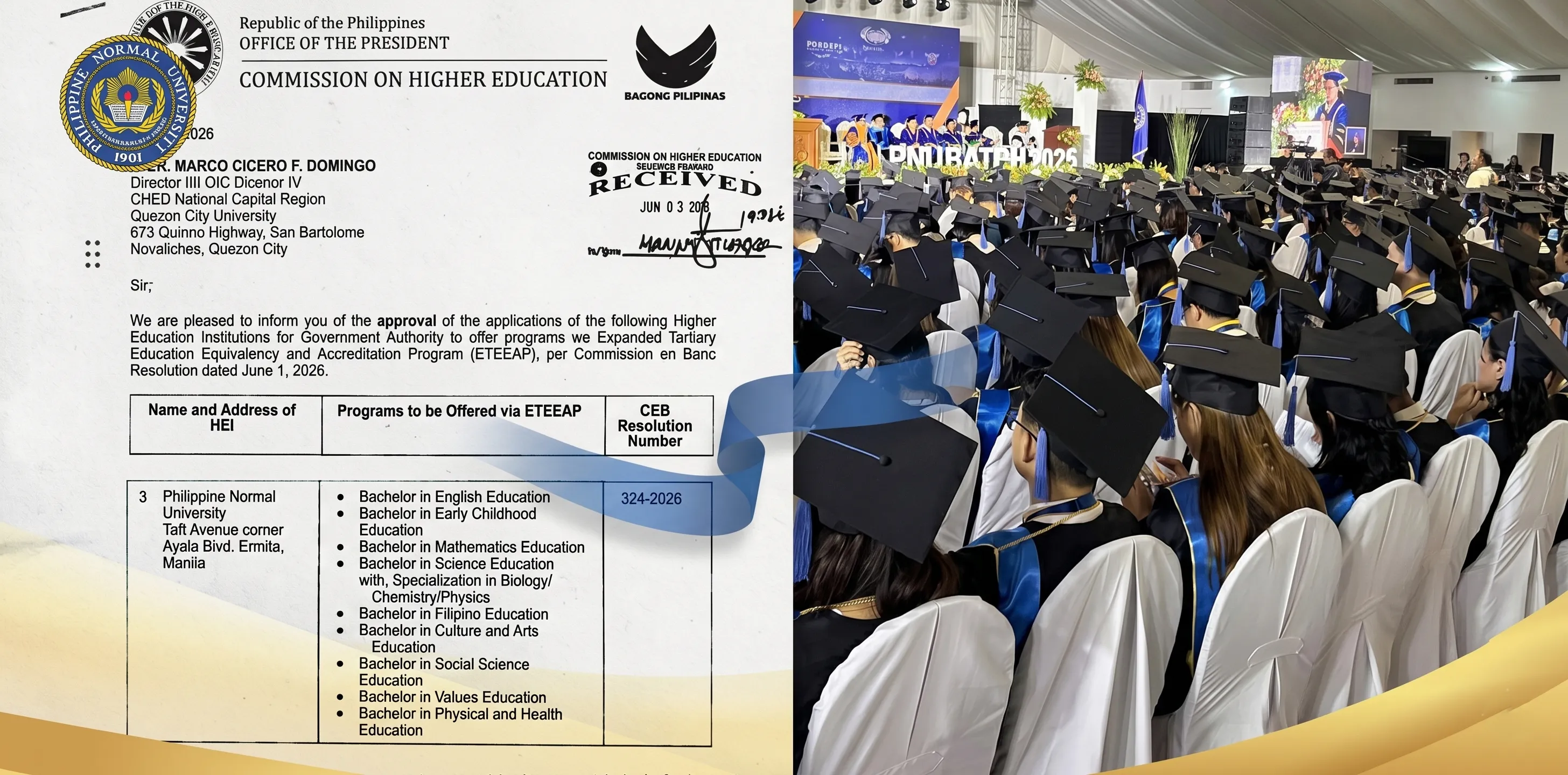
This is not a future proposal. A pilot batch has already been set, slots have been defined, and CHED Chairperson Shirley Agrupis confirmed that around 300 OFWs have already graduated under the existing ETEEAP system. The next chapter for this program is bigger, faster, and comes with a scholarship.
What Is in This Article
- What Is the LEAP-OFWs Program?
- How OFWs Can Finish a Degree in One to Two Years
- The Pilot Batch: 100 Slots, Two Categories
- Who Can Apply and What Are the Qualifications?
- How the Program Is Funded
- What an ETEEAP Degree Actually Does for You
- How to Start Preparing Now
What Is the LEAP-OFWs Program?
The LEAP-OFWs program is OWWA’s dedicated financial assistance initiative that helps eligible overseas workers access the ETEEAP. It removes one of the most practical barriers OFWs face when considering the program: cost.
OWWA Administrator Patricia Yvonne “PY” Caunan described the initiative as part of President Ferdinand R. Marcos Jr.’s directive to strengthen reintegration pathways and ensure that every OFW has clear opportunities upon returning to the Philippines. The program is also part of a whole-of-government coordination effort that involves the Department of Labor and Employment (DOLE) and the Department of Migrant Workers (DMW), with the goal of connecting ETEEAP graduates to job opportunities both locally and abroad.
The MOA signing formally structured the relationship between the two agencies, establishing how OWWA’s financial assistance will connect with CHED’s ETEEAP framework to bring both institutions together around a shared goal.
How OFWs Can Finish a Degree in One to Two Years
The standard college degree in the Philippines takes four years in a traditional classroom setting. Under ETEEAP, the timeline changes significantly because the program does not ask you to repeat what you already know.
Administrator Caunan explained the concept simply: instead of going back to school for four years, an OFW whose experience has already been assessed and credited could finish in two years or even one, depending on how thoroughly their prior learning covers the degree curriculum.
This is possible because ETEEAP operates on a competency-based framework. When a deputized higher education institution assesses your application, they map your work history, training certifications, and professional achievements against the learning outcomes of the degree program you are pursuing. The years you spent managing a team, operating equipment, or supervising a project abroad are evaluated as potential equivalencies for specific academic subjects.
Whatever gaps remain after the assessment are addressed through a competency enrichment phase. During this phase, learners complete targeted supplemental modules, a research paper or capstone project, and any other requirements the school identifies. Only the gaps need to be filled, not the entire four-year curriculum.
For OFWs still working overseas, these enrichment activities can be taken online, which means workers do not have to stop earning in order to finish their degree.
The Pilot Batch: 100 Slots, Two Categories
The first pilot run of the LEAP-OFWs program will accommodate 100 OFWs, divided into two equal groups:
50 slots for OFWs currently abroad. These workers may complete the program online, allowing them to keep their jobs and income while studying. This is a direct acknowledgment that many OFWs are still supporting families at home and cannot simply leave their posts to go back to school.
50 slots for returning OFWs. These are workers who have already come back to the Philippines and are in the process of reintegrating into the local workforce. An ETEEAP degree at this stage can be the credential that helps them transition into better local employment rather than being pushed to go overseas again.
OWWA has indicated that guidelines for applications in the first batch will be released through official channels. OFWs who are interested are encouraged to start monitoring updates and to begin preparing their documentation in the meantime.
Who Can Apply and What Are the Qualifications?
To benefit from the LEAP-OFWs scholarship, applicants must first meet the basic ETEEAP eligibility requirements. Under Republic Act No. 12124, which institutionalized the program in 2025, those qualifications are as follows:
- Citizenship: The applicant must be a Filipino citizen, whether residing in the Philippines or abroad.
- Age: The applicant must be at least 23 years old.
- Educational background: The applicant must have completed a secondary school program, evidenced by a high school diploma. Completion of the Alternative Learning System Accreditation and Equivalency Assessment or a passing result on the Philippine Educational Placement Test stating qualification to enter college is also accepted.
- Work experience: The applicant must have at least five aggregate years of work experience in an industry related to the degree program they are applying for.
The work experience requirement is the most important factor for OFWs. It is not enough to have worked abroad for five years. The nature of that work must be genuinely connected to the degree being sought. An OFW who spent a decade in hotel housekeeping and hospitality operations in Singapore, for example, would be a strong candidate for a Hospitality Management degree. A construction worker in the Middle East with years of site supervision experience could qualify for a program in Construction Technology.
You can check your eligibility through ETEEAP.PH’s qualification checker before you contact any school.
In addition to ETEEAP eligibility, OWWA will have its own financial eligibility requirements for the scholarship component. Administrators have stated that the program is open to all OFWs under the Alagang OWWA Program, which includes both members and non-members. The specific guidelines for financial qualification will be released by OWWA separately.
How the Program Is Funded
Administrator Caunan clarified a key detail that distinguishes LEAP-OFWs from other OWWA benefits: this program is funded through the General Appropriations Act, not from OWWA’s trust fund. That distinction matters because it means the scholarship draws from national government funds rather than from the contributions that OWWA members pay in.
This makes the program more broadly accessible. OFWs who are not OWWA members are still potentially eligible to apply, and the fund is not depleting a reserve that would otherwise go to other OFW welfare services.
OWWA will also coordinate with CHED-deputized schools to help ETEEAP graduates connect to job opportunities, both domestically and abroad. The intent is not just to hand out degrees but to create a pathway from degree completion to actual career advancement.
What an ETEEAP Degree Actually Does for You
A degree earned through ETEEAP is identical in legal standing to a degree earned through four years of traditional study. It carries the same recognition from CHED, the same eligibility for employment, and the same qualification for professional examinations.
For OFWs specifically, the practical benefits are significant:
Career advancement at home. When returning workers are competing for local jobs, a bachelor’s degree is often the threshold requirement for managerial and professional roles. Without it, years of overseas experience can be overlooked during hiring. With it, that same experience becomes a genuine competitive advantage.
Eligibility for PRC licensure examinations. In regulated professions like engineering, nursing, and accounting, you cannot sit for the board examination without a degree. ETEEAP can unlock that eligibility for workers who have spent years practicing in those fields but never formalized their credentials.
Salary grade increases in government service. Civil service pay grades are directly tied to educational attainment. A degree can mean a concrete increase in compensation for OFWs who eventually return and enter public service roles.
Pursuit of graduate education. An ETEEAP bachelor’s degree qualifies its holder to apply for master’s degree programs. The path toward further academic advancement remains fully open.
To explore what programs are available under ETEEAP, you can browse the ETEEAP Programs directory on ETEEAP.PH.
How to Start Preparing Now
OWWA has indicated that application guidelines for the pilot batch are forthcoming. While waiting, there are practical steps any OFW can take right now.
Step 1: Check your eligibility. Use the eligibility checker on ETEEAP.PH to assess whether your age, educational background, and work experience align with the program’s minimum requirements.
Step 2: Identify the right degree program. Your chosen program must match your field of work. Browse the ETEEAP Programs page to find a degree that genuinely reflects your professional background and career goals.
Step 3: Find a deputized school. Not every school in the Philippines can offer ETEEAP, and not every deputized school offers every program. The Accredited Schools page lists all CHED-authorized institutions, including those with online and flexible learning arrangements suited to OFWs.
Step 4: Gather your documents. This is the step most people underestimate. Collecting certificates of employment, job descriptions, project accomplishments, training certificates, and other proof of work experience can take weeks, especially when previous employers are in other countries. Starting this process early gives you a stronger application and less stress when guidelines are officially released.
Step 5: Get in touch with a deputized school. Once you have identified a target program and institution, reach out to the school’s ETEEAP office to ask about their specific requirements and intake periods. Schools have their own additional criteria beyond the CHED minimum, and it is always worth confirming those early.
The Get Started page on ETEEAP.PH walks you through a quick eligibility checklist and gives you a practical starting point for this process.
Your Experience Already Has Value. Now It Can Have a Degree.
For an OFW who has spent years building skills far from home, a college degree can feel like something that was left behind a long time ago. The OWWA-CHED MOA and the LEAP-OFWs program are the government’s most direct effort yet to change that.
The pilot batch is limited to 100 participants, which means demand will likely exceed availability in the first round. The OFWs who prepare early and understand the process clearly will have the best chance of being part of it.
If you want to understand how ETEEAP works before the application guidelines are released, the ETEEAP.PH resource center is the best place to start. There you will find a full breakdown of the assessment process, the competency enrichment phase, and how schools evaluate your prior learning.
Your years of work abroad have already taught you more than most classrooms could. The LEAP-OFWs program exists to make sure that education is finally recognized for what it is.