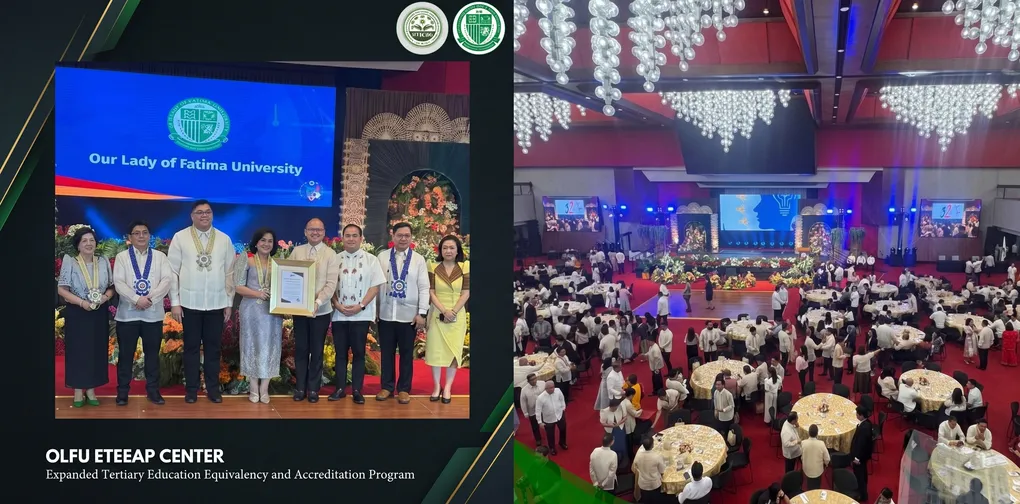
Our Lady of Fatima University ETEEAP Honored by CHED as One of the Country's Exemplary Deputized Institutions
When the Commission on Higher Education confers recognition on a deputized institution, it is not handing out a certificate of participation. It is making a public declaration that a school has gone above and beyond the baseline requirements of a nationally mandated program. For Our Lady of Fatima University, that declaration has now arrived.
CHED has named OLFU ETEEAP as one of the Exemplary ETEEAP Deputized Higher Education Institutions in the Philippines. The recognition puts OLFU in a select group of schools that have demonstrated not just compliance with program standards, but genuine leadership in advancing lifelong learning and inclusive access to college education.
For the thousands of working Filipinos who still do not have a degree, news like this matters more than it might first appear.
What’s in This Article
- What the CHED Recognition Actually Means
- Why OLFU’s Commitment to Rigor Stands Out
- How ETEEAP Works and Why Quality Assurance Is Critical
- What Makes a Deputized HEI Exemplary Under RA 12124
- What This Means for Working Professionals Looking to Enroll
- The Bigger Picture: ETEEAP as a National Priority
What the CHED Recognition Actually Means
CHED does not grant the title of “Exemplary ETEEAP Deputized HEI” by default. Deputization itself already carries a high bar. Under Republic Act No. 12124, the ETEEAP Act signed into law in March 2025, an institution must qualify as either a Center of Excellence or Center of Development in the relevant discipline, hold autonomous or deregulated status as a private HEI, or meet equivalent standards as a state or local university. Getting deputized is a starting line, not a finish line.
Recognition as an exemplary institution signals something additional. It reflects the quality of how the program is actually run at the ground level: the strength of the panel of assessors, the integrity of the equivalency process, the support given to students throughout their academic journey, and the school’s active contribution to CHED’s broader mission of making quality tertiary education accessible to all Filipinos.
OLFU ETEEAP has publicly stated that this award affirms the program’s unwavering commitment to assessing prior learning, work experience, and lifelong achievements with rigor, fairness, and academic integrity. Every competency credit recognized by the program, the school emphasized, reflects actual quality, not just documentation.
Why OLFU’s Commitment to Rigor Stands Out
One of the most persistent concerns around alternative degree pathways is the question of credibility. Critics have long worried that programs like ETEEAP could become shortcuts rather than genuine assessments of competence. OLFU’s recognition by CHED directly pushes back against that concern.
According to OLFU ETEEAP’s own statement on the recognition, the program ensures that assessments are conducted with the highest standards of academic integrity. That language is significant because it echoes the core design principles of ETEEAP itself.
Under the ETEEAP Implementing Rules and Regulations issued through CHED Memorandum Order No. 11, Series of 2025, deputized HEIs are required to constitute a panel of both internal and external assessors. Internal assessors are curriculum experts from within the institution. External assessors are industry practitioners and professionals from the relevant field. Together, they evaluate not just a candidate’s paper credentials but also their actual skills through written examinations, portfolio reviews, practical demonstrations, and oral interviews.
This is a demanding system. For a school to consistently implement it at a level that earns CHED commendation, it requires sustained institutional investment in the right people, processes, and infrastructure.
How ETEEAP Works and Why Quality Assurance Is Critical
To understand why this recognition matters, it helps to understand what ETEEAP actually requires of both the institution and the candidate.
ETEEAP is the Philippine government’s comprehensive alternative learning program for tertiary education. It allows working professionals who meet the eligibility criteria to earn a full baccalaureate degree by having their prior learning, work experience, and non-formal training assessed and assigned equivalent academic credits.
The basic qualifications under RA 12124 are straightforward: the applicant must be a Filipino citizen, at least 23 years old, a high school graduate or equivalent, and must have at least five cumulative years of work experience in an industry directly related to the degree being sought.
But meeting those qualifications only gets a candidate through the door. The actual process of earning the degree is far more demanding. The deputized HEI conducts a multi-stage assessment that covers portfolio evaluation, standardized written tests, hands-on skills demonstrations, and a panel interview. After assessment, the institution identifies any academic gaps and requires the candidate to complete competency enrichment coursework to bridge those deficiencies before the degree is conferred.
The degree that results from this process is legally equivalent to one earned through a traditional four-year college program. ETEEAP graduates can take Professional Regulation Commission licensure examinations, qualify for government positions with degree requirements, and pursue graduate education.
This is precisely why the quality of the implementing institution matters so much. A poorly run ETEEAP program could devalue degrees, harm graduates professionally, and undermine public trust in the program. A well-run one, like OLFU’s, does the opposite.
What Makes a Deputized HEI Exemplary Under RA 12124
The ETEEAP Act and its IRR set specific expectations for deputized institutions. Among the requirements:
The HEI must maintain a clear manual of operations covering all phases of the program from application to degree conferment. It must develop well-defined competency standards for each degree program. It must use structured assessment tools and rubrics to ensure consistent and fair credit awarding. It must offer competency enrichment programs using flexible learning modalities so that students can complete deficiencies while continuing to work. And it must submit annual reports to CHED covering enrollment, graduation statistics, and graduate tracer data.
Going beyond compliance to earn the label of “exemplary” means the institution has demonstrated these systems work in practice, not just on paper. The school’s administrators, faculty, assessors, and support staff all play a role in that outcome.
OLFU ETEEAP has explicitly acknowledged this in its recognition statement, crediting the visionary direction of its administrators, the dedication of its ETEEAP faculty, the hard work of its staff, and the resilience of its students. That combination of institutional commitment and learner determination is exactly what the program was designed to harness.
What This Means for Working Professionals Looking to Enroll
If you are a working professional considering ETEEAP, the recognition of an institution by CHED is one of the most important signals you can look for when evaluating your options.
Choosing a school with demonstrated quality in ETEEAP delivery is not just about prestige. It is about protecting the practical value of the degree you will earn. An ETEEAP degree from a well-regarded, actively compliant institution carries weight with employers, government agencies, and licensing boards. A degree from a program with compliance issues could put you in a difficult position professionally.
Before enrolling in any ETEEAP program, it is always worth verifying the current deputization status of your target institution. Our Accredited Schools directory lists the HEIs that hold active CHED deputization, along with relevant details to help you make an informed choice.
You should also take the time to check whether you meet the eligibility requirements before approaching any institution. Requirements are consistent across schools at the national level, but individual HEIs are permitted to add their own admission criteria on top of the minimums set by CHED.
If you are unsure where to begin, ETEEAP.PH’s eligibility checker can help you assess your qualifications before you reach out to a school.
The Bigger Picture: ETEEAP as a National Priority
The recognition of OLFU ETEEAP comes at a meaningful moment in the program’s history. With RA 12124 in effect as of 2025, ETEEAP has moved from being an executive program administered under EO 330 into a permanent, legislated feature of the Philippine education system. CHED has also issued the full IRR through CMO No. 11, Series of 2025, giving the program its most detailed and enforceable set of operating standards to date.
That legislative foundation means that quality and accountability are no longer optional extras for ETEEAP providers. They are statutory obligations. Institutions that meet those obligations at a high level, as OLFU has done, are not just serving their students well. They are helping to build the long-term credibility of the entire program.
More than 39,000 Filipinos have enrolled in ETEEAP since 2020, and over 18,700 have already graduated with CHED-recognized degrees according to enrollment and graduate trend data cited on ETEEAP.PH. Behind each of those numbers is a working professional who carried the weight of years of unrecognized expertise and finally had it formalized into something that opened new doors.
Schools like OLFU, earning recognition for exemplary implementation, are part of why that number will keep growing.
Are you a working professional ready to have your experience recognized? Start by checking your ETEEAP eligibility or browsing the list of CHED-accredited schools offering the program today.
Photo credit: OLFU ETEEAP Center