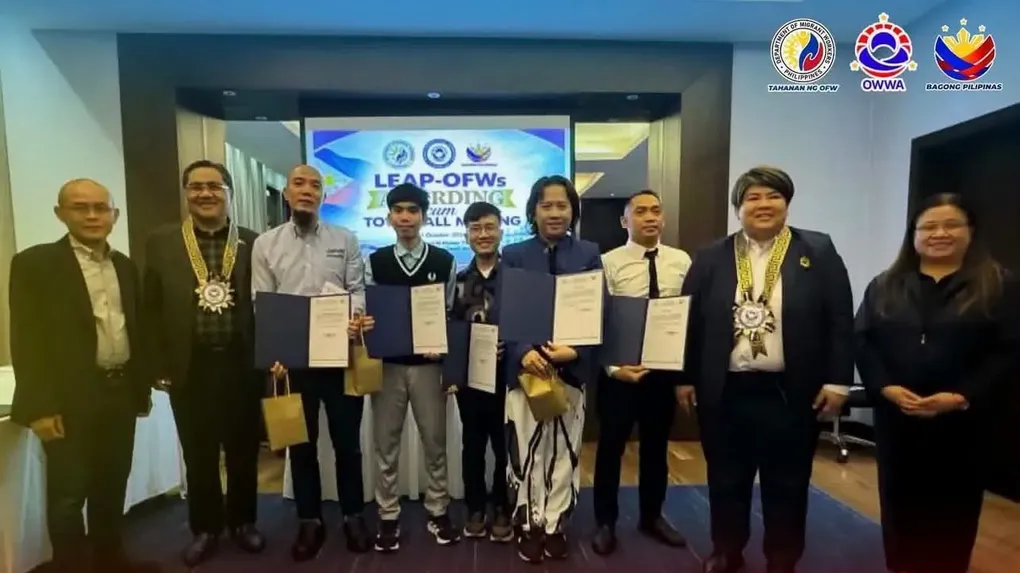
First Five LEAP-OFWs Scholars Open a Door for Every OFW Chasing a Degree
Somewhere in Al Khobar, five Filipino workers just did something many OFWs have quietly wished for. They turned years of work abroad into a path toward a college diploma, with financial help attached.
The Overseas Workers Welfare Administration (OWWA) announced that these five are the first qualified beneficiaries of the Alagang OWWA StepUP-ETEEAP, which is being carried out through the Lifelong Learning Education Assistance Program for OFWs, or LEAP-OFWs. It is a small group. But first cohorts have a way of showing everyone else that the road is real.
In this article
- What happened in Al Khobar
- What the first scholars will receive
- Why this matters for OFWs
- How ETEEAP recognizes work done abroad
- Who can apply
- Practical steps before you apply
What happened in Al Khobar
OWWA said the five OFWs based in Al Khobar, Saudi Arabia were identified as the first qualified beneficiaries of the program. The Alagang OWWA StepUP component builds on the Expanded Tertiary Education Equivalency and Accreditation Program, better known as ETEEAP, and LEAP-OFWs is the channel through which it is being implemented.
For readers who are new to the idea, ETEEAP lets working adults earn a degree by having their prior learning and work experience assessed, instead of sitting through a traditional four-year curriculum. If that is unfamiliar territory, our primer on what ETEEAP is is a good place to start.
What the first scholars will receive
The five were not all given the same document. According to OWWA, two will receive a Notice of Eligibility, while three will receive a Notice of Award and Guarantee for educational assistance of up to ₱50,000.
Here is the detail worth noticing. The money is not handed to the scholar. OWWA will pay it directly to the Higher Education Institution (HEI) the scholar chooses, following the program’s guidelines. That setup keeps the funds tied to tuition and school charges, and it means choosing the right school matters even more.
Speaking of which, ETEEAP degrees can only be granted by institutions deputized by the Commission on Higher Education. You can browse the list of accredited schools and compare available ETEEAP programs before you commit to anything.
Why this matters for OFWs
Ask any OFW about their education story and you will often hear the same thing. School came second. Family came first. OWWA put it plainly in its announcement: many OFWs set their own studies aside so they could work and support their families.
ETEEAP speaks directly to that situation. Through the program, an OFW’s prior learning, work experience, knowledge, and skills can be assessed and recognized as an alternative route to an academic degree. The scholarship angle adds something new. Recognition was always possible, but cost is often what stops people at the starting line.
The legal footing is solid, too. President Ferdinand Marcos Jr. signed Republic Act No. 12124, the ETEEAP Act, in March 2025. The law covers qualified Filipino citizens whether they live in the Philippines or abroad, and it names the Commission on Higher Education as the lead agency. It also includes a non-diminution clause, which says the Act should not reduce benefits or assistance that overseas Filipinos and migrant workers already receive under other laws and rules.
How ETEEAP recognizes work done abroad
Wondering whether a job in Saudi Arabia counts? The law asks for at least five years of aggregate work experience in an industry related to the degree you want. It does not say the work must have been done in the Philippines.
Once you apply, the school reviews your documents and assesses you. Under the implementing rules, that can include a portfolio evaluation, written examinations, practical demonstrations, and an oral defense or interview. A panel of assessors then decides how much credit your learning is worth against the subjects in the degree program. Gaps are not a dealbreaker. You may be asked to complete competency enrichment, and the rules allow e-learning, mobile learning, and blended learning for this, even while you are outside the school’s physical location.
One caution. Schools that want to run ETEEAP through open distance and e-learning must secure a separate authority first, so ask any school you are considering how it delivers the program to applicants overseas. Our page for OFWs pulls together more of this in one place, and the recent orientation for OFWs in Saudi Arabia and the UAE shows how active outreach has become.
Who can apply
The basic requirements come straight from the ETEEAP Act. You must be a Filipino citizen, at least 23 years old at the time of application, and a secondary school completer. A high school diploma works, as do passing results from the Philippine Educational Placement Test or the Alternative Learning System Accreditation and Equivalency test. Then comes the five years of related work experience. Deputized schools may add their own admission criteria on top.
You can run through the full list on our eligibility page. A word of advice: the scholarship has its own guidelines, so confirm LEAP-OFWs requirements with OWWA and your chosen school, not just the ETEEAP basics.
Practical steps before you apply
Start gathering paper now. Typical applications call for a PSA birth certificate, proof of schooling, a comprehensive portfolio of your work history, training certificates, and a recommendation letter from an employer or industry expert. Many OFWs have a few of these scattered across old emails and drawers. Our guide to the ETEEAP application form walks through what to prepare.
Next, think about money beyond the assistance. Fees vary by school, so read our cost breakdown before you budget. And protect yourself from scams. CHED has warned the public about unauthorized institutions offering ETEEAP, which we cover in a dedicated guide.
Finally, dream a little. ETEEAP graduates have gone on to master’s programs abroad, and you can read how in this guide.
Five OFWs in Al Khobar have taken the first step, and the door they opened is meant for many more. If you have years of work behind you and a diploma still missing from your story, begin with our Get Started page, check if you qualify, and read the latest on LEAP-OFWs in our news and updates. Have questions? The FAQs are a good next stop.
Photo credit: OWWA’s Facebook page