CHED Launches ENROLL OFWs: The Online Enlistment System That Brings ETEEAP to Filipino Workers Worldwide
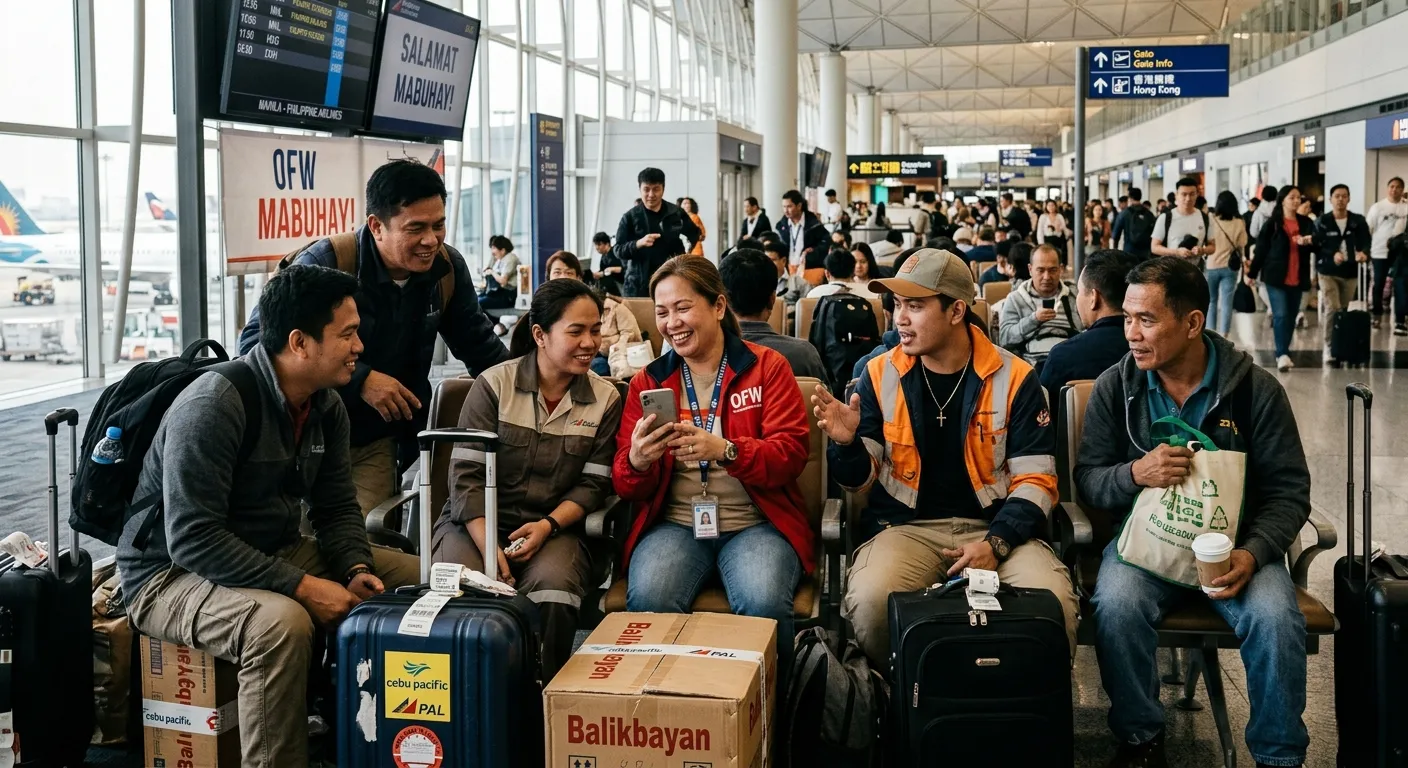
For millions of Overseas Filipino Workers who carry years of hard-earned skills but not a college diploma, the path to a recognized degree has always felt like something reserved for those who stayed home. That is starting to change in a very concrete way. The Commission on Higher Education has officially launched a centralized online enlistment system for the Expanded Tertiary Education Equivalency and Accreditation Program, and it is designed specifically to meet OFWs exactly where they are, whether that is Riyadh, Rome, or Rotterdam.
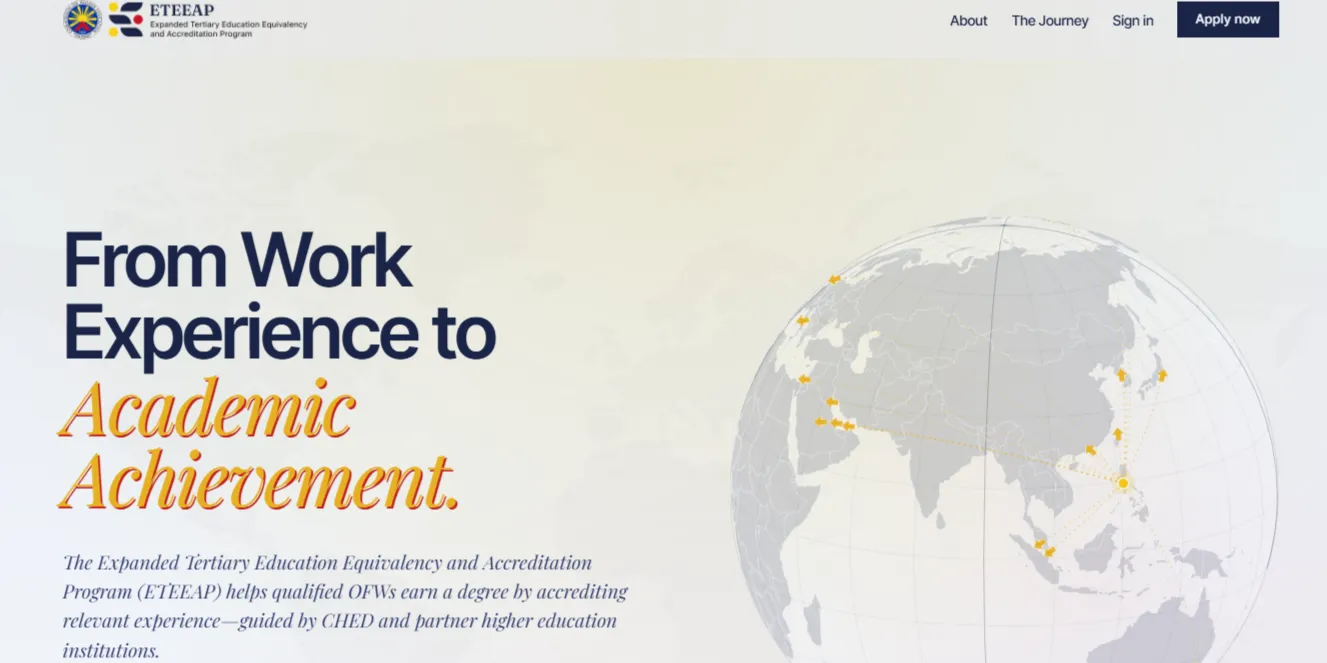
The initiative is called the ETEEAP National Registration and Onboarding for Lifelong Learning Overseas Filipino Workers, or ENROLL OFWs. It represents one of the most significant steps yet in making the ETEEAP accessible to Filipinos working abroad, and it signals a new chapter for a program that was already transformed by the passage of Republic Act No. 12124, also known as the ETEEAP Act.
In This Article
- What Is the ENROLL OFWs System?
- Where Was It Launched and Who Was Involved?
- How Does the System Work?
- Who Is Already Enrolled?
- Why This Matters for OFWs
- What Are the Basic ETEEAP Requirements?
- What Documents Do You Need to Prepare?
- Which Schools Are Currently Deputized?
What Is the ENROLL OFWs System?
ENROLL OFWs is a centralized platform that allows Filipino migrant workers to register for the ETEEAP and complete pre-assessment procedures regardless of where they are located in the world. Before this system existed, applying for the ETEEAP typically required physical coordination with a school in the Philippines, which posed an obvious challenge for someone working a twelve-hour shift in a hospital in Germany or on a vessel in the Pacific.
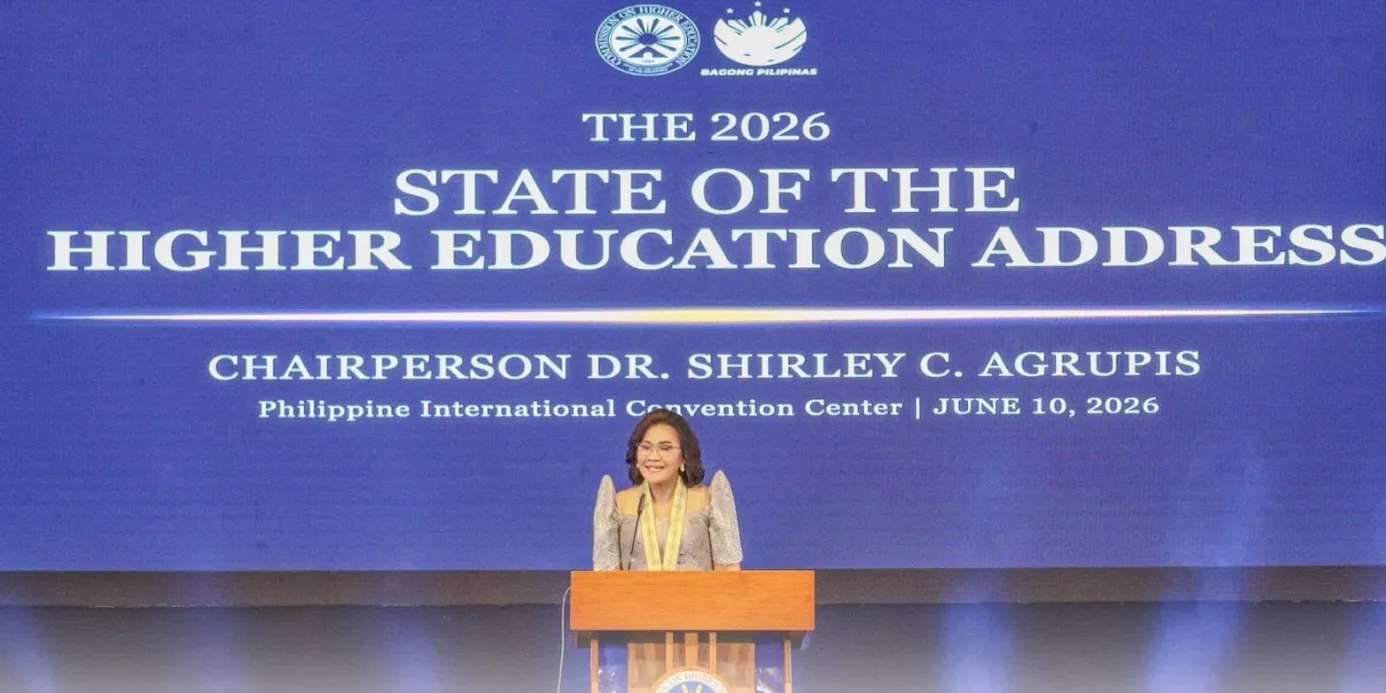
The platform is designed to identify qualified OFW profiles, facilitate the initial ETEEAP application, provide streamlined enlistment services, and carry out expedited processing through coordinated support from multiple government agencies. Importantly, CHED Chairperson Shirley Agrupis confirmed that the system will operate through a blended approach, combining an online portal with on-site registration kiosks located in various higher education institutions across the country for applicants who are already back home or who have family members assisting with the process.
The objective, as articulated by Dr. Agrupis, is to improve employment readiness, enable career mobility, and support the reintegration of OFWs into Philippine society and the workforce.
Where Was It Launched and Who Was Involved?
The ENROLL OFWs system was formally inaugurated at the “ETEEAP Sa Bagong Pilipinas Forum: Pag-angat ng Kasanayan, Paghubog ng Kinabukasan” held at the Design + Arts Campus of De La Salle-College of Saint Benilde. The choice of venue was meaningful. Benilde has been a CHED-deputized ETEEAP institution since 2004, making it one of the longest-running providers of the program in the country. Its ETEEAP-accredited programs include Hospitality and Luxury Management, Information Systems, Music Production, Production Design, and Dance.
Chancellor Benhur Ong of Benilde captured the spirit of the event well: “We saw early on that education must evolve. It must meet learners where they are, and must honor the diverse paths they took toward excellence.”
The live demonstration of the ENROLL OFWs Online Enlistment System was led by CHED Executive Director Cinderella Filipina Benitez-Jaro alongside Judy Ann Melo, a Benilde ETEEAP candidate based in Italy who is pursuing a degree in Hospitality and Luxury Management. Several other ETEEAP graduates and current enrollees joined virtually to share how they converted their professional knowledge into recognized academic qualifications.
CHED also acknowledged the role of multiple partner agencies in making this initiative possible, including the Department of Foreign Affairs, the Department of Labor and Employment, the Department of Migrant Workers, the Commission on Filipino Overseas, and the Overseas Workers Welfare Administration.
How Does the System Work?
The ENROLL OFWs platform functions as a one-stop digital entry point for the ETEEAP application journey. Here is a general picture of what the system allows an OFW to do:
- Register and create a profile using the online portal from any location with internet access.
- Undergo pre-assessment screening to determine whether their work experience and educational background meet the minimum ETEEAP qualifications.
- Submit documentary requirements digitally, reducing the need for physical document submission during the initial stages.
- Connect with a deputized HEI that matches their program of interest, with interagency support to expedite the process.
The system does not remove the need for a formal assessment conducted by a Panel of Assessors at a deputized school. The ETEEAP process still involves written examinations, portfolio evaluations, and panel interviews. What ENROLL OFWs does is remove the friction from the very first step, making it far easier for an OFW to get started without having to fly home.
To understand the full assessment process in detail, visit the ETEEAP guide on ETEEAP.PH.
Who Is Already Enrolled?
This is perhaps the most compelling data point from the launch. CHED Chairperson Agrupis revealed that the program already has 1,409 OFW enrollees who are currently based overseas. These individuals are primarily located in the Middle East, Southeast Asia, Europe, and the United States, and they are taking programs in engineering, business and finance, allied health, education, and other fields that align closely with their professional experiences.
That number tells a story. It shows that demand for the ETEEAP among overseas Filipinos is not hypothetical. There are over a thousand workers right now, spread across different time zones and industries, actively working toward a degree that reflects what they already know how to do.
Why This Matters for OFWs
The Department of Labor and Employment’s representation at the launch underscored the practical stakes of this initiative. Assistant Secretary Joel Gonzales emphasized that the ETEEAP recognizes the skills and experience of workers, and that DOLE works to ensure those recognized skills translate into real opportunities, including jobs, livelihood, and protection.
For many OFWs, the absence of a college degree has been a ceiling. It prevents them from qualifying for management roles, from sitting for Professional Regulation Commission licensure examinations, and in some cases from meeting the educational requirements of government positions they would otherwise be perfectly suited for. A CHED-recognized ETEEAP degree removes that ceiling without requiring them to leave their jobs and return to a classroom for four more years.
It is also worth noting that the ETEEAP is not a shortcut or a diploma mill. It is a rigorous academic process mandated by Republic Act No. 12124, where competency is proven through real assessment, not merely assumed. The degree you earn is equivalent in legal standing to a traditional four-year bachelor’s degree.
What Are the Basic ETEEAP Requirements?
If you are an OFW wondering whether you qualify, the basic eligibility criteria under RA 12124 are straightforward. You must be a Filipino citizen, at least 23 years old, a holder of at least a high school diploma or its equivalent, and must have a minimum of five years of aggregate work experience in an industry related to the degree you are pursuing.
You can also submit documentation of relevant training programs, TESDA National Certificates, Certificates of Competency, and other formal or informal learning credentials to strengthen your application.
For a complete breakdown of qualifications and what may disqualify an application, read the Who May Apply page on ETEEAP.PH.
What Documents Do You Need to Prepare?
Whether you are applying through the ENROLL OFWs system or directly through a deputized school, the documentary requirements for ETEEAP applicants generally include the following:
- PSA or NSO authenticated birth certificate
- High school diploma or most recent academic record
- Service record or certificate of employment covering your relevant work experience
- A comprehensive resume
- Certificates of training and workshops completed
- Certificates of proficiency in your field or discipline
- Barangay clearance, NBI clearance, or a valid passport
- A 1x1 ID picture
- Accomplished ETEEAP application form
- Any other documents or evidence of capability in the field applied for
Requirements may vary depending on the specific deputized HEI and the degree program being pursued. Always confirm directly with the institution you choose to apply to.
Which Schools Are Currently Deputized?
As of 2026, only a select number of higher education institutions have been formally re-deputized by CHED to offer ETEEAP programs. The list includes Holy Angel University, Manuel S. Enverga University Foundation, Cebu Institute of Technology University, University of the Cordilleras, University of Baguio, and Romblon State University. Other previously deputized schools are currently undergoing CHED’s recertification process.
For the most current and complete directory of accredited schools and the programs they offer, visit the Accredited Schools page on ETEEAP.PH.
The launch of ENROLL OFWs is more than a government announcement. It is a recognition that education must be flexible enough to reach people wherever their work has taken them. If you have spent years building expertise in your field and are ready to turn that experience into a degree, the system is now more accessible than it has ever been.
Ready to find out if you qualify? Start with the ETEEAP eligibility check or browse the list of accredited schools to find a deputized institution that fits your program and schedule.