CHED ENROLL OFWs: The New ETEEAP Registration Portal for Overseas Filipino Workers
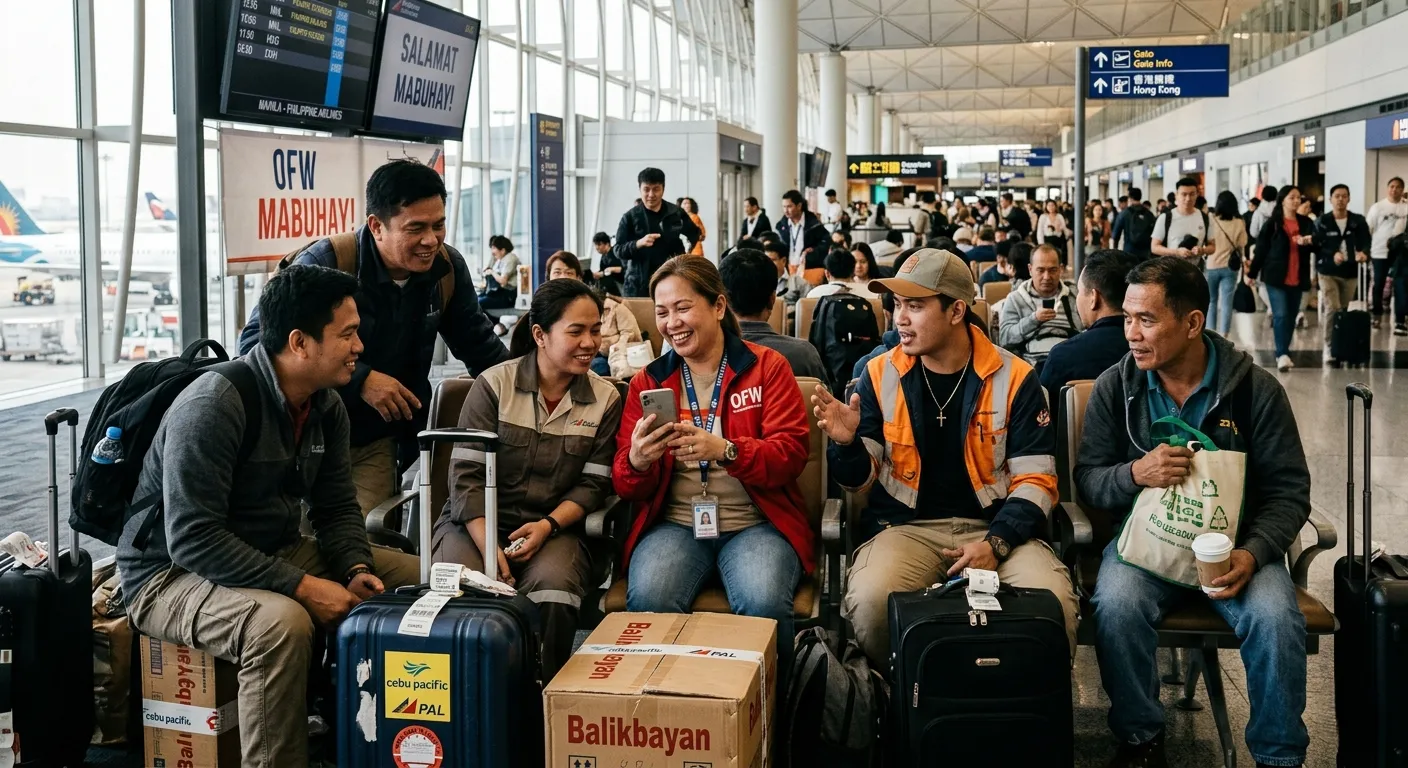
Millions of Overseas Filipino Workers have spent years building careers far from home. They have managed teams, solved problems on the ground, and developed real professional expertise in fields ranging from healthcare and construction to hospitality and engineering. Yet for many, the absence of a college diploma remains a quiet barrier between where they are now and where they want to go.
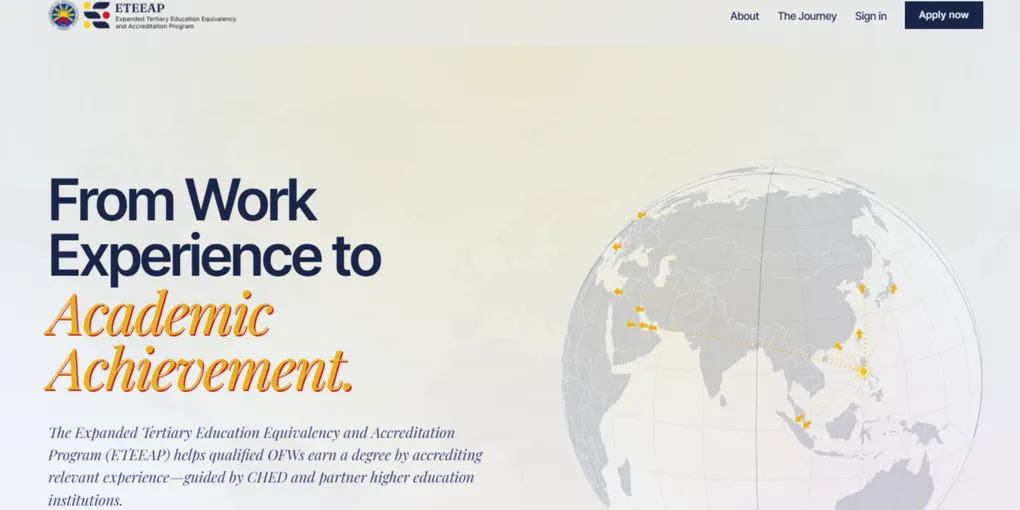
The Commission on Higher Education (CHED) is now directly addressing this gap. Together with ETEEAP-deputized higher education institutions (HEIs) across the country, CHED launched the ETEEAP National Registration and Onboarding for Lifelong Learning Overseas Filipino Workers, known as ENROLL OFWs. The official registration portal is now live at eteeap.ched.gov.ph, and it represents one of the most practical steps yet toward making a college degree accessible to Filipino workers wherever they are in the world.
This article explains what ENROLL OFWs is, who it is for, and exactly how you can take the first step toward turning your overseas work experience into a recognized academic degree.
In This Article
- What Is ENROLL OFWs?
- Who Is This Program For?
- Basic Qualifications to Apply
- How to Register at eteeap.ched.gov.ph
- Documents You Will Need
- What Happens After You Register?
- ETEEAP Is Now a Permanent Law
- Common Questions from OFW Applicants
What Is ENROLL OFWs?
ENROLL OFWs is a centralized pre-assessment registration mechanism launched by CHED to streamline how adult learners formally enter the Expanded Tertiary Education Equivalency and Accreditation Program (ETEEAP). The name stands for ETEEAP National Registration and Onboarding for Lifelong Learning Overseas Filipino Workers.
Before this portal existed, OFWs who wanted to pursue a degree through ETEEAP had to contact individual schools on their own, navigate different application processes, and figure out on their own where to start. ENROLL OFWs changes that by creating a single, government-managed entry point where OFWs can register their intent, submit their basic profile, and be connected with a deputized partner institution that matches their field of work and target degree.
This is not the full ETEEAP application process. Think of it as your official first step. It is the mechanism that gets you into the system, paired with the right school, and moving toward assessment.
The program also extends a specific pathway to repatriated OFWs displaced by the ongoing crisis in the Middle East, giving them a structured and government-supported route to a college degree as they rebuild their lives and careers in the Philippines.
Who Is This Program For?
ENROLL OFWs is designed for a broad range of Filipino workers and returning professionals:
- Active OFWs currently deployed abroad who want to convert their years of overseas employment into formal academic credit
- Repatriated OFWs who have returned to the Philippines and are ready to pursue a degree based on the skills they built while working abroad
- Displaced OFWs affected by international crises, including those recently repatriated from the Middle East, who need an accessible educational pathway
- Other working adults who meet the standard ETEEAP qualifications and want to earn a degree through prior learning recognition
No single industry is excluded. OFWs in healthcare, construction, domestic work, information technology, maritime, manufacturing, hospitality, and other sectors may all find applicable degree programs through ETEEAP-deputized schools, depending on their years of relevant experience.
Basic Qualifications to Apply
Before you register through the CHED portal, it is worth confirming that you meet the minimum eligibility requirements. These are set under Republic Act No. 12124, the law that permanently institutionalizes ETEEAP, and they apply to all applicants whether residing in the Philippines or abroad.
1. Filipino Citizenship You must be a Filipino citizen. There is no requirement to be physically present in the Philippines when you register.
2. Age Requirement You must be at least 23 years old at the time of your application.
3. Educational Attainment You must have completed a secondary school program. A high school diploma is the standard evidence for this. If you did not finish high school, a passing result from the Philippine Educational Placement Test (PEPT) or an Alternative Learning System (ALS) Accreditation and Equivalency Assessment and Certification that qualifies you for college entry is also acceptable.
4. Work Experience You must have at least five years of aggregate work experience in an industry related to the degree program you are applying for. This does not have to be five continuous years with one employer. Experience accumulated across different jobs, positions, or employers counts, as long as it is all relevant to the degree you want to pursue.
5. Proficiency Evidence You must be able to demonstrate proficiency in your chosen field. Acceptable evidence includes a certificate of proficiency from a government regulatory body, from an employer, or from a licensed practitioner. If you are self-employed, a business registration certificate is accepted. TESDA National Certificates and Certificates of Competency are also recognized and can be submitted as supporting documentation.
Not sure if you meet these requirements? Use the ETEEAP eligibility checker at ETEEAP.PH to quickly estimate your readiness before you register.
How to Register at eteeap.ched.gov.ph
The CHED ETEEAP portal is designed to be accessible, including for OFWs who are still abroad and primarily using a mobile phone to get online.
Here is how to get started:
- Open your browser and go to https://eteeap.ched.gov.ph/.
- Click “Start your application” or “Apply now” on the homepage.
- Create your account and fill out your applicant profile, including your educational background, work history, and the degree program you are targeting.
- Submit your registration. You will then go through a document review process and be connected with a CHED-deputized partner institution.
The portal guides you through five stages: application, document review, assessment, accreditation, and graduation. Each stage is handled in coordination with your matched partner school.
Keep in mind that the ETEEAP assessment itself, including the portfolio evaluation, written exams, panel interview, and competency enrichment, will be administered by the specific HEI you are matched with. To get a sense of which schools offer ETEEAP programs and which degree programs they carry, browse our accredited schools directory and programs page.
Documents You Will Need
While exact requirements can vary depending on the school you are matched with, the standard checklist of documents for ETEEAP applicants includes the following:
- 1x1 ID picture (original)
- PSA authenticated birth certificate
- Barangay clearance, NBI clearance, or valid passport
- Service record or Certificate of Employment (COE) from all relevant employers
- Most recent academic record or high school diploma
- Comprehensive resume or curriculum vitae
- Certificates of training, workshops, and seminars attended
- Certificates of individual proficiency in the discipline or field applied for
- Any other evidence of capability, knowledge, or competency in your field
- Accomplished ETEEAP application form
For OFWs specifically, it is worth preparing your employment contracts, overseas work records, and any certifications or recognitions you received from foreign employers. If any of these documents are in a foreign language, having them translated and authenticated in advance will save time later.
Organize your documents chronologically and prepare a clear narrative of your professional history. A well-organized portfolio makes a strong first impression with your assessors.
What Happens After You Register?
Once your registration is submitted through the CHED portal and your documents are reviewed, the program moves into a pre-assessment stage where a deputized HEI evaluates your profile. This is where the school determines:
- Whether your work experience aligns with available degree programs
- Which subjects or competency areas from the degree curriculum your experience already covers
- What gaps, if any, will require additional coursework or modules to fill
After the pre-assessment, you proceed to the full ETEEAP assessment process. This typically involves a portfolio evaluation, written examinations tailored to your degree, practical skills demonstrations where applicable, and a panel interview conducted by academic faculty and industry practitioners.
If gaps are identified between your experience and the degree requirements, you will complete a competency enrichment phase. This may involve modular subjects, online coursework, a research paper, or in some cases a brief industry immersion. Once all requirements are satisfied, the deputized HEI awards you the appropriate academic degree.
This is a rigorous process by design. ETEEAP is not a shortcut to a diploma. It is a legitimate alternative assessment pathway that holds graduates to the same academic standards as traditional degree programs. The degree you earn through ETEEAP is a CHED-recognized bachelor’s degree with equal standing in employment, civil service eligibility, and professional licensure examinations.
For a full breakdown of what to expect at each stage, visit our how ETEEAP works page.
ETEEAP Is Now a Permanent Law
One of the most important things to know about the current state of ETEEAP is that it is no longer just a government program operating under an executive order. In March 2025, President Ferdinand Romualdez Marcos Jr. signed Republic Act No. 12124, also known as the ETEEAP Act.
This law permanently institutionalizes ETEEAP as a core part of the Philippine education system. It provides the program with dedicated government funding, a formal technical secretariat under CHED, and clearer guidelines for how HEIs are deputized and how quality is maintained across the program.
Under RA 12124, CHED is also required to allocate student financial assistance to ETEEAP learners under Republic Act No. 10931, the Universal Access to Quality Tertiary Education Act. This means that eligible ETEEAP learners, including OFWs studying at state universities and colleges, may qualify for free tuition and other financial support.
The law also introduced a notable expansion: existing bachelor’s degree holders may now apply for ETEEAP to earn a second degree, provided that their work experience and prior learning are related to the second degree being sought. This opens the program to professionals who already have a diploma but want to formalize expertise in a different field.
For OFWs, the passage of RA 12124 means that the degree earned through ETEEAP now rests on a stronger and more permanent legal foundation than at any point in the program’s history.
Common Questions from OFW Applicants
Will my overseas work experience be recognized? Yes. Under RA 12124, work experience gained abroad is eligible for recognition as long as it is relevant to the degree program you are applying for. The five-year aggregate requirement applies whether your experience was earned locally, overseas, or a combination of both.
Can I register while I am still abroad? Yes. The ENROLL OFWs portal at eteeap.ched.gov.ph is accessible online from anywhere in the world. Initial registration and document review can be done remotely. Coordinate with your assigned partner HEI to find out which parts of the assessment process can also be completed online or through distance learning.
Is an ETEEAP degree the same as a traditional degree? Yes. A degree earned through ETEEAP is a CHED-recognized bachelor’s degree. It qualifies you for employment, promotions, civil service eligibility, and professional licensure examinations on equal footing with any traditionally earned degree.
What degree programs are available to OFWs? Programs vary by deputized school. Visit our programs page for a general overview, and check with your matched HEI for their current available degrees.
Are there fees involved? Yes, but deputized HEIs are required to set reasonable fees, and students at state universities and colleges may qualify for free tuition under RA 10931. Your matched school will provide the specific fee schedule applicable to your program.
For more detailed answers, visit the ETEEAP.PH FAQ page.
Your years of hard work abroad already represent an education. The ENROLL OFWs program and the ETEEAP portal at eteeap.ched.gov.ph exist to make sure that education is finally recognized with the credentials you deserve.
Ready to get started? Visit eteeap.ched.gov.ph to register, and use the ETEEAP.PH eligibility checker to confirm your qualifications before you apply. If you want to explore which schools and degree programs are available, our accredited schools directory is a good place to start.
The door is open. Take the first step.