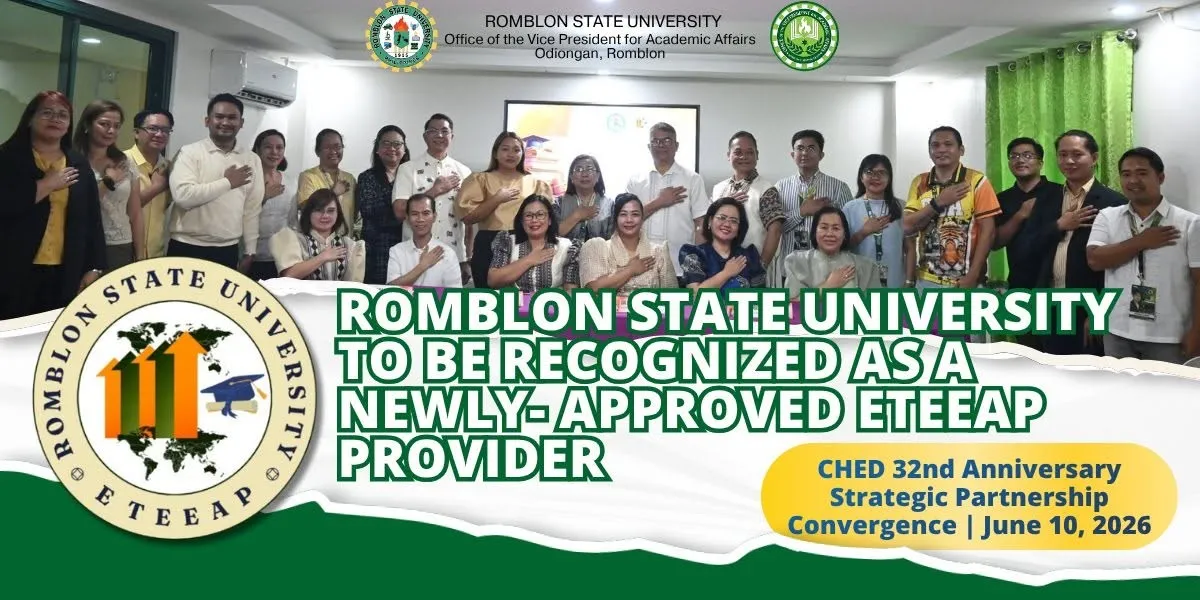
Bulacan State University Joins First Wave of State Universities Deputized for ETEEAP
Bulacan State University has just earned a distinction that very few state universities in the country can currently claim. On June 10, 2026, during the 32nd anniversary celebration of the Commission on Higher Education at the Philippine International Convention Center in Pasay City, BulSU was formally recognized as one of the first State Universities and Colleges deputized as an Expanded Tertiary Education Equivalency and Accreditation Program provider under CHED Memorandum Order No. 11, Series of 2025.
It is a small phrase with a fairly large meaning. CMO No. 11 is the brand new Implementing Rules and Regulations of Republic Act No. 12124, the law that finally gave ETEEAP a permanent statutory foundation after nearly three decades of running on an executive order. Being among the first SUCs cleared under this tougher, freshly minted framework says something specific about where BulSU’s program already stood before the rules even changed.
What’s in This Article
- A Different Kind of First
- Why SUC Deputization Isn’t Automatic
- The Four Programs BulSU Can Now Offer
- A Fifth Program Already in the Pipeline
- Leadership Behind the Push
- What This Means If You’re Eyeing a Degree at BulSU
A Different Kind of First
Most ETEEAP news in recent months has revolved around private universities renewing or expanding their deputization. BulSU’s recognition stands out because it belongs to a much smaller, more closely scrutinized group: public state universities.
That distinction matters. A private university seeking deputization mainly has to prove it holds autonomous or deregulated status. A state university has a steeper climb. Under the new IRR, SUCs must be classified at least as Level II institutions and must secure a Certificate of Program Compliance for every specific program they intend to open through ETEEAP, not just for the school as a whole. BulSU cleared that bar across multiple programs at once, on the very first cycle of deputizations issued under the new law.
Why SUC Deputization Isn’t Automatic
It’s worth pausing on this, because the assumption that any public university can simply open an ETEEAP track is a common misconception. Republic Act No. 12124 places real conditions on who gets to run an equivalency program, and CHED Memorandum Order No. 11 spells those conditions out in detail.
For SUCs specifically, deputization requires more than institutional reputation. CHED looks at the SUC’s classification level, evaluates each individual program against the Policies, Standards, and Guidelines set for that discipline, and only then issues the Certificate of Program Compliance that makes ETEEAP delivery legal for that program. The Commission also reviews whether the school has a dedicated office for the program, a trained pool of internal and external assessors, documented assessment rubrics, and a Manual of Operations that spells out how applicants are screened, evaluated, and eventually awarded credit.
In other words, this wasn’t a courtesy recognition tied to BulSU’s general standing as a respected provincial university. It reflects a program that had its internal systems, from portfolio evaluation to panel assessment, already built and functioning well enough to pass a national-level review under a stricter law than the one that governed ETEEAP for the past 29 years.
If you want the full breakdown of how the eligibility process works for both schools and applicants, our guide on ETEEAP eligibility and requirements walks through the criteria CHED uses on both ends.
The Four Programs BulSU Can Now Offer
Under its new deputization, BulSU is authorized to assess and award degrees through ETEEAP in four programs:
- Bachelor of Science in Information Technology (BSIT)
- Bachelor of Science in Business Administration (BSBA), major in Marketing Management
- Bachelor of Public Administration (BPA)
- Bachelor in Early Childhood Education (BECEd)
The spread is a sensible one for a university serving Bulacan and the surrounding CALABARZON-adjacent labor market. IT professionals who have spent years in technical support, systems administration, or software roles without ever finishing a degree now have a credible path to formalize that experience. The same goes for marketing and sales professionals who built careers through results rather than coursework, public servants and local government employees whose decades on the job never translated into a diploma, and childcare or preschool educators who have been teaching for years without the formal credential that licensure and promotion often require.
Each of these fields has a real population of working adults in Central Luzon who fit the ETEEAP profile almost perfectly: experienced, capable, and missing only the paper that says so.
A Fifth Program Already in the Pipeline
BulSU isn’t stopping at four. The university has already submitted its application to CHED for the inclusion of a Bachelor of Science in Social Work (BSSW) program under its ETEEAP offerings.
Social work is a field where the gap between practical experience and formal academic recognition tends to be especially wide. Community organizers, barangay social welfare officers, and case workers in non-government organizations often accumulate years of frontline experience long before, if ever, they hold a related degree. A deputized BSSW track would give that group a legitimate route toward the credential that licensure exams and many government social work positions require.
CHED’s review timeline for new program applications varies depending on documentation completeness and the scheduling of evaluation visits, so it isn’t yet confirmed when this fifth program might be approved. We’ll update this article and our news section once that decision comes through.
Leadership Behind the Push
The recognition comes under the leadership of University President Dr. Teody C. San Andres, whose administration has framed the ETEEAP expansion as part of a broader push to make BulSU’s degrees accessible to people the traditional four-year pipeline was never built for.
That framing lines up with the spirit of the law itself. Republic Act No. 12124 was written specifically to give working professionals, returning OFWs, and college undergraduates who never finished their degree a structured, credible way back into higher education without requiring them to abandon their jobs or restart from year one. A state university putting real institutional weight behind that mission, rather than treating ETEEAP as a side offering, tends to produce programs that actually serve the people they’re meant for.
What This Means If You’re Eyeing a Degree at BulSU
If you’re a working professional in Bulacan or nearby provinces who has spent years in IT, marketing, public administration, or early childhood education without finishing college, this deputization opens a door that wasn’t available to you a year ago. BulSU joins a still-short list of public universities authorized to run ETEEAP under the new legal framework, and that authorization is not handed out lightly.
A few things are worth keeping in mind before you reach out to the university directly. Deputization is program-specific, so confirm that the exact degree you’re interested in is covered. Requirements can also vary slightly between institutions even though the national minimums, such as being at least 23 years old and holding five aggregate years of related work experience, stay the same everywhere. Our eligibility guide covers those national baseline requirements in full, and our directory of accredited schools is a good place to compare BulSU’s offerings against other deputized institutions as new updates come in.
Years on the job already taught you most of what a classroom would. BulSU’s new deputization is one more sign that the system meant to recognize that is steadily growing, one rigorously reviewed institution at a time.
Curious if your own work experience qualifies? Check your ETEEAP eligibility or browse the full list of CHED-deputized schools to see where you can start.
Photo Credit: Bulacan State University