MMSU Brings Its ETEEAP and ODeL Story to CHED Region 1's Lifelong Learning Summit
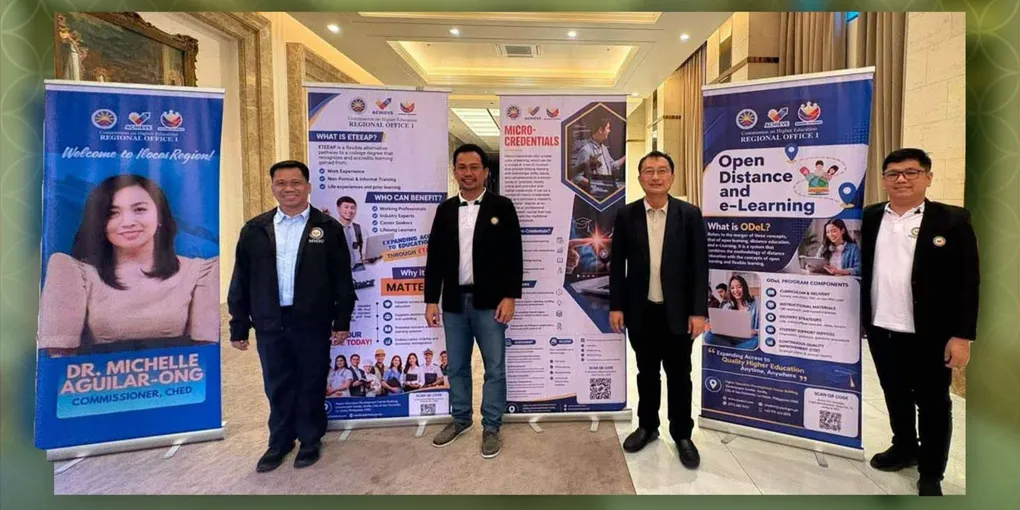
On July 28 and 29, the town of Calasiao hosted a conversation with real consequences for thousands of working Filipinos who never finished college. Mariano Marcos State University (MMSU) sent a four-person delegation to the Commission on Higher Education Regional Office I (CHED RO1) Lifelong Learning Summit, joining more than 110 participants from higher education institutions across the region to talk about something that sounds bureaucratic on paper but is deeply personal in practice: how to make a degree reachable for people whose lives no longer fit inside a traditional four-year classroom.
Here is a quick jump to what this article covers:
- Two Days, One Question: How Do We Widen the Door?
- Who MMSU Sent, and Why the Line-Up Matters
- Eight ETEEAP Programs, Seven ODeL Authorities
- Where This Fits in MMSU’s SUCCEED Agenda
- The Bigger Picture: CHED’s ACHIEVE 2030
- What This Could Mean If You’re Considering MMSU
Two Days, One Question: How Do We Widen the Door?
The summit’s headline speaker was CHED Commissioner Michelle Aguilar-Ong, who used her time to press a point that regional education leaders hear often but rarely get pushed to act on immediately: institutions need to build accessible, high-quality pathways for learners through non-conventional education. She framed this around three things in particular: institutional lifelong learning frameworks, the expansion of flexible learning pathways, and the practical work of turning both into something a 35-year-old factory supervisor or a returning OFW can actually use.
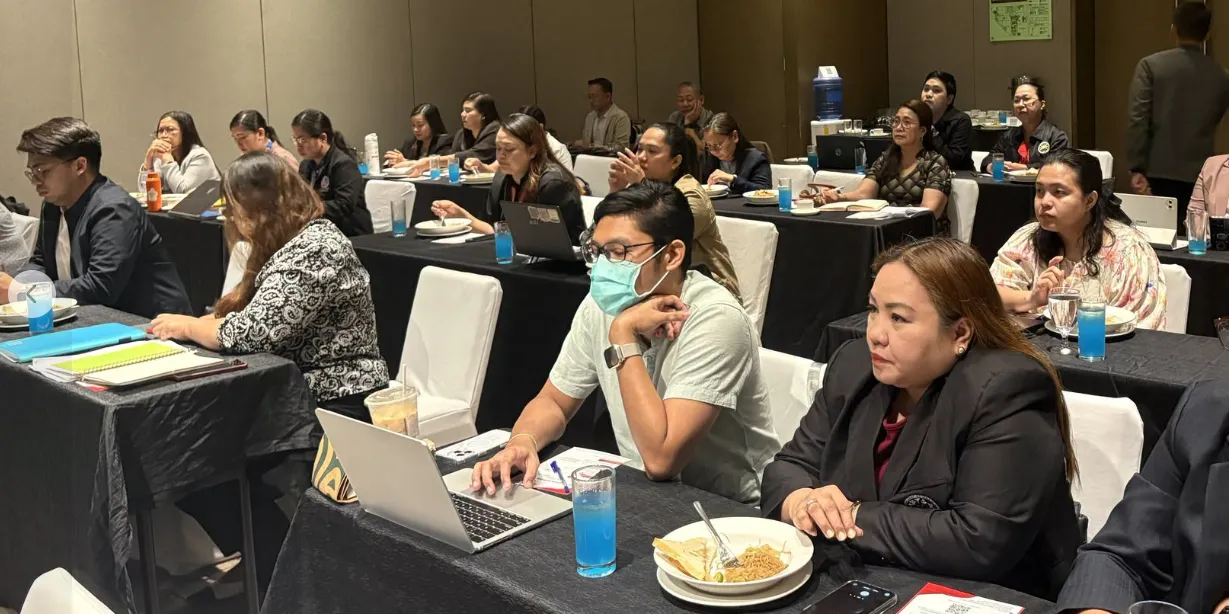
That framing matters because it is easy for a two-day summit to stay theoretical. What made this one different is that it landed in front of an audience that already runs these programs day to day. Over 110 representatives from Region 1 HEIs sat through sessions that were less about whether lifelong learning matters and more about how to operationalize it, campus by campus, program by program.
Who MMSU Sent, and Why the Line-Up Matters
MMSU did not send a single administrator to represent the university in passing. It sent the people who actually run the two initiatives the summit was built around. The delegation included Dr. Aris Reynold Cajigal, Vice President for Academic Affairs; Dr. Joel Lopez, director for Curriculum Development and Innovative Learning (CDIL); Dr. Regie Boy Fabro, chief for Open and Distance e-Learning (ODeL); and Dr. Robert Salvador, chief for the Expanded Tertiary Education Equivalency and Accreditation Program (ETEEAP).
Sending both the ODeL chief and the ETEEAP chief together is not a small detail. It echoes a pattern we have seen elsewhere in Region 1 this year. When University of Luzon convened its own plenary on ETEEAP and micro-credentialing back in May, the pairing was deliberate too: these two tools, equivalency assessment and flexible online delivery, are increasingly treated as two halves of the same strategy rather than separate programs competing for attention. MMSU’s line-up in Calasiao suggests the university is thinking the same way.
Eight ETEEAP Programs, Seven ODeL Authorities
Under CDIL’s coordination, MMSU is currently strengthening its ETEEAP implementation for eight degree programs while also holding government authority to offer seven degree programs through ODeL. That ETEEAP figure is not a new claim. It lines up with CHED’s own Commission en Banc Resolution from earlier this year, which re-certified eight ETEEAP programs at MMSU spread across its Main, Laoag City, and Currimao campuses, covering everything from Development Communication to Marine Biology. We covered that re-certification in detail in our piece on Region 1’s ETEEAP re-certification, and it is worth noting that MMSU alone accounted for two-thirds of the region’s re-certified programs.
The ODeL side is a separate regulatory track, and this is where the legal framework behind ETEEAP is directly relevant. Republic Act No. 12124, the law that institutionalized the program nationwide, is explicit that HEIs wanting to deliver ETEEAP through Open Distance Learning and e-Learning modalities must first secure a separate authority from CHED, distinct from their basic ETEEAP deputization. The Implementing Rules and Regulations repeat the same condition for the enrichment phase of the program, the part where an applicant closes competency gaps before a degree is awarded. We break this down more fully in our explainer on CHED CMO No. 11, Series of 2025, but the short version is that a university cannot simply decide to run ETEEAP online. It has to earn that authority separately, which is exactly what MMSU has done for seven of its programs.
None of this is abstract for the people who have actually gone through it. Earlier this year we told the story of Ruben Nalundasan, a science aide who earned his Bachelor of Science in Industrial Technology through ETEEAP at MMSU after six years of trying. His degree came out of the exact machinery this summit was discussing: a deputized HEI, a panel of assessors, and a university willing to build pathways around a working adult’s schedule rather than the other way around.
Where This Fits in MMSU’s SUCCEED Agenda
MMSU frames this expansion as part of the Strategic Access and Equity pillar of President Virgilio Julius P. Manzano, Jr.’s SUCCEED Agenda, which centers on widening access to quality higher education through innovative, learner-centered academic programs. It is a fairly direct statement of intent: the university is not treating ETEEAP and ODeL as side programs tucked away in an admissions office. They are positioned as core to how MMSU plans to grow its enrollment base among working professionals, career shifters, and adults who stopped short of a degree the first time around.
The Bigger Picture: CHED’s ACHIEVE 2030
The Calasiao summit did not happen in isolation. It sits under CHED’s A.C.H.I.E.V.E. 2030 agenda, the Commission’s seven-point strategic framework for higher education through the end of the decade, and specifically under its Advanced and Accessible Lifelong Learning pillar. There is a small but telling detail here for anyone who follows CHED closely: the agenda’s chief architect, CHED Chairperson Shirley Agrupis, served as MMSU’s own president from 2017 to 2025 before moving to the Commission. Watching her former university lean this hard into flexible, non-traditional pathways under her successor is a fitting continuation of a priority she carried with her to Quezon City.
For institutions across Region 1, the practical takeaway from the ACHIEVE framing is that ETEEAP and ODeL are no longer treated as optional add-ons a university might offer if it has the bandwidth. They are being positioned as central to how CHED wants Philippine higher education to function by 2030, which means more regional summits like this one, and likely more pressure on HEIs to expand rather than merely maintain their offerings.
What This Could Mean If You’re Considering MMSU
If you are a working professional in Ilocos Norte or nearby provinces weighing whether to pursue a degree through ETEEAP, this summit is a useful signal even before any new program is formally announced. It tells you that MMSU’s academic leadership, from the Vice President for Academic Affairs down to the ETEEAP and ODeL chiefs, is actively coordinating around these two pathways rather than running them as quiet, standalone offices.
Before applying anywhere, it is worth reviewing the basic national qualifications on our ETEEAP eligibility guide, which walks through the age, education, and work experience requirements most deputized HEIs, including MMSU, apply as a baseline. From there, you can compare MMSU against other deputized schools through our accredited ETEEAP schools directory, since authority to offer a given program is always specific to the institution and the degree.
Photo Credit: Mariano Marcos State University