Leyte Normal University Strengthens ETEEAP Quality Assurance Through Assessor Orientation and Capacity Building
Behind every ETEEAP degree is a panel of people most applicants never get to thank by name. They are the assessors who sit through portfolios, ask the hard interview questions, and decide whether years of work experience truly add up to college-level competence. Leyte Normal University just gave its own panel a tune-up, and the timing says a lot about where the program is headed.
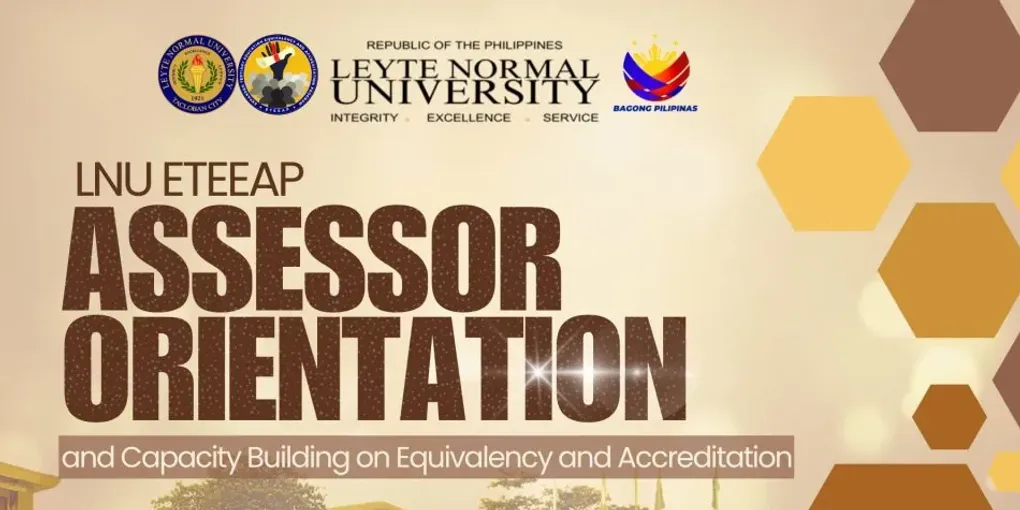
On April 10, 2026, the Leyte Normal University Expanded Tertiary Education Equivalency and Accreditation Program (ETEEAP) office held a full-day Assessors’ Orientation and Capacity Building on Equivalency and Accreditation, conducted entirely through Zoom. It was not a routine staff meeting. University officials, internal assessors, and external assessors all logged in for a single purpose: making sure the people who evaluate ETEEAP candidates are evaluating them the right way.
Here is what the day covered, in case you want to jump ahead:
- Who Showed Up, and Why It Matters
- Lessons from Two Veterans of the Program
- Why Assessor Training Is Not Optional
- What This Means If You’re Applying to LNU
Who Showed Up, and Why It Matters
The guest list alone tells you this was treated as a priority, not an afterthought. LNU President Dr. Gil Nicetas B. Villarino joined the session, alongside Vice President for Academic Services Dr. Lina G. Fabian. The College of Education sent its Dean, Dr. Billy A. Danday, together with Associate Dean Dr. Myrna L. Macalinao. The College of Management and Entrepreneurship was represented by Dean Dr. Evangeline V. Sanchez and Associate Dean Prof. Emily Jill T. Nival. Rounding out the room, virtually speaking, were the university’s internal and external assessors themselves.
That mix is not accidental. Under the implementing rules of Republic Act No. 12124, the ETEEAP Act, every deputized higher education institution is required to constitute a panel of internal and external assessors who determine the equivalency credits an applicant deserves. Internal assessors are the curriculum and discipline experts already inside the university. External assessors are the industry practitioners brought in from the outside, the people who know what real competence looks like on the job, not just on paper. Getting both groups into the same orientation, with deans and the university president present, signals that LNU is treating ETEEAP assessment as a shared institutional responsibility rather than something handled quietly by one office.
Lessons from Two Veterans of the Program
The orientation brought in two resource speakers with real mileage in equivalency and accreditation work: Mr. Angelo Marco U. Lacson, Vice Chancellor for Academics, and Mr. Melbourne B. Piccio, ETEEAP Coordinator of De La Salle–College of Saint Benilde. Both speakers walked participants through practices and lessons drawn from years of running assessment systems for non-traditional learners, the kind of insight that does not come from a manual but from sitting across the table from hundreds of candidates over time.
It is worth noting how deliberate this choice was. De La Salle–College of Saint Benilde is one of the longer-running ETEEAP providers in the country, and pulling expertise from an established program to strengthen a newer or growing one is exactly the kind of cross-institutional collaboration the program was designed to encourage. Assessment quality should not vary wildly from one school to the next, and sessions like this help close that gap.
Why Assessor Training Is Not Optional
It is easy to assume that once a university gets deputized, the hard part is over. In practice, deputization is just the starting line. The rules under RA 12124 ask deputized HEIs to develop assessment tools, set rubrics for awarding credit, and regularly review how those tools are applied, because the people running portfolio evaluations, written exams, practical demonstrations, and oral interviews need to apply the same standard to every candidate who walks through the door, whether that candidate is a factory supervisor, an OFW returning from overseas, or a small business owner with two decades of informal training behind them.
That is the entire point of an assessor orientation. A panel that is not calibrated together risks awarding credit inconsistently, which undermines the credibility of the degree itself. LNU’s decision to bring assessors back for capacity building, well after their initial deputization, suggests an institution that understands accreditation is a continuing discipline, not a one-time checkbox. If you want a fuller picture of how this assessment process is structured nationwide, our guide on the ETEEAP framework breaks down how portfolio review, exams, and panel interviews fit together.
What This Means If You’re Applying to LNU
If you are eyeing a BS Education degree, or any program LNU offers through equivalency, this orientation is good news in a quiet, practical way. A better-trained panel generally means clearer expectations during your assessment, more consistent feedback on your portfolio, and less guesswork about what the assessors are actually looking for. LNU ETEEAP Director Dr. Perlita M. Vivero, who spearheaded the activity together with Office Staff Ms. Simdie S. Dicot, has been vocal about the program’s goal of providing what she calls the pathway to accelerated professional placement. Investing in assessor competence is one of the more concrete ways an institution backs that promise up.
LNU’s ETEEAP office extended its thanks to all the assessors who joined the session, recognizing their engagement as central to the day’s success. For Tacloban-based professionals and applicants across Region VIII considering the program, it is a reminder that the quality of your ETEEAP journey depends heavily on the rigor an institution puts into training the people who will assess you.
Want to know if you already meet the basic requirements before reaching out to a deputized school like LNU? Check our eligibility guide to see where you stand, browse other CHED-deputized schools near you, or head over to our Get Started page to begin mapping your own work experience into a degree.