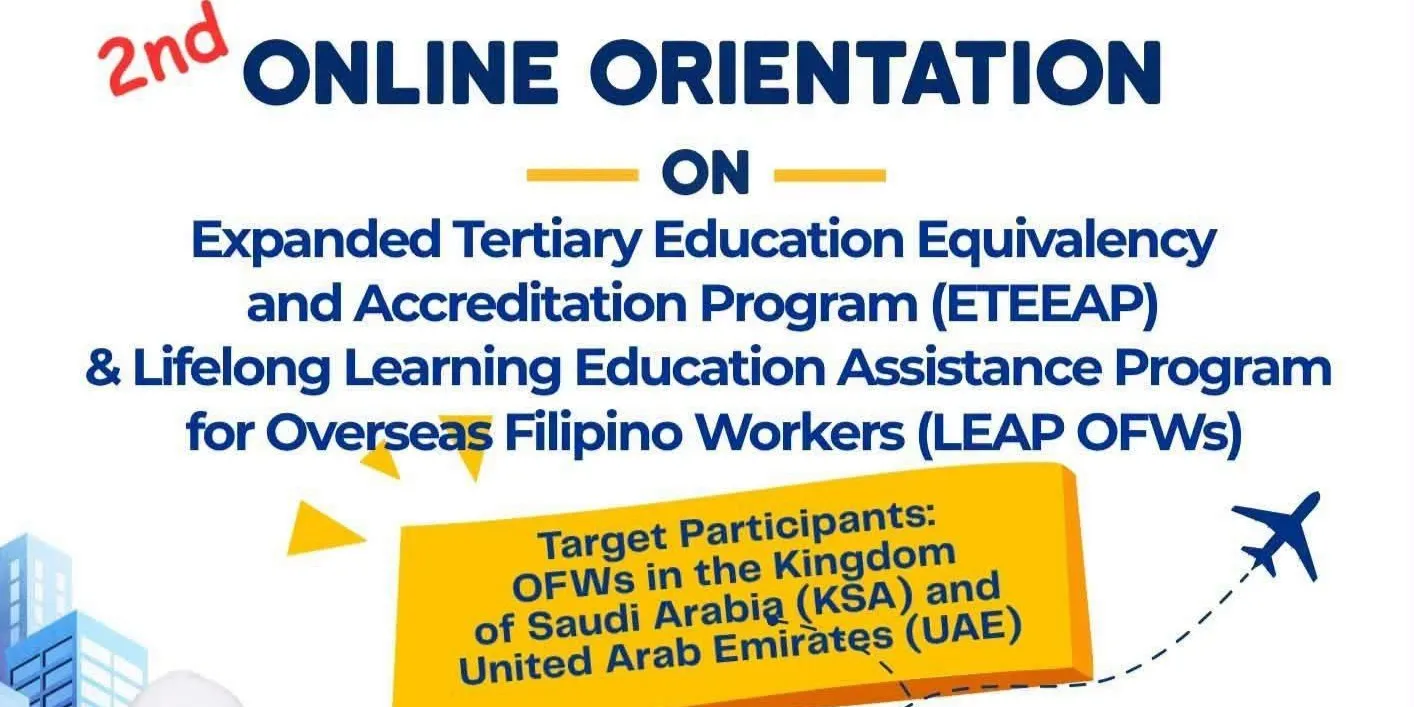
CHEDRO II Brings ETEEAP Information to OFWs at Tuguegarao's Bayanihan Caravan
Picture a sports complex on a busy day. Booths line the floor, families queue for documents, and returning workers carry folders stuffed with certificates from years spent abroad. That was the scene at the Cagayan Coliseum inside the Cagayan Sports Complex in San Gabriel, Tuguegarao City, where the Commission on Higher Education Regional Office II (CHEDRO II) joined the Bayanihan Para sa Balikbayang Manggagawa National Reintegration Network (BBM-NRN) caravan.
The one-day event was led by the Department of Migrant Workers (DMW). It gathered twenty-three national government agencies and partner companies under one roof, all with the same goal: bring services, information, and job opportunities closer to Overseas Filipino Workers (OFWs), returning migrant workers, and members of the community.
For anyone who left school early to work, or who built a long career overseas without a diploma, one of those booths mattered a great deal.
Jump to a section
- Why a reintegration caravan matters
- What CHEDRO II offered under Kaalaman
- Why ETEEAP fits returning workers
- What the law says about applicants abroad
- How to take the next step
Why a reintegration caravan matters
Coming home after years of work abroad is rarely just a matter of unpacking. There are records to update, benefits to ask about, skills to put to use, and often a question that sits quietly in the background: what now?
Caravans like this one try to answer that question in person. Instead of sending workers from office to office, the government agencies come to them. The aim, as described by the organizers, is to support the smooth reintegration of returning migrant workers into their communities and help them build a sustainable life back home.
Education is a big part of that picture. A degree can open doors to supervisory roles, government service, and further study. For a worker who has already spent years mastering a trade or profession, the missing piece is often not skill but recognition.
What CHEDRO II offered under Kaalaman
The caravan’s Kaalaman component focused on sharing knowledge, and this is where CHEDRO II set up shop. Visitors could get information and guidance on three areas of CHED’s work.
The first was the Student Financial Assistance Programs, or StuFAPs, which CHED administers. The second was the set of programs under the Universal Access to Quality Tertiary Education Act. The third was the Expanded Tertiary Education Equivalency and Accreditation Program, better known as ETEEAP.
CHEDRO II also helped people with the Electronic Certification, Authentication, and Verification system, or eCAV. This one is easy to overlook, yet it is practical. It supports requests for the certification, authentication, and verification of academic credentials, the kind of paperwork that returning workers and their families often need for employment, further study, or other official purposes.
Taken together, the offerings cover a full arc: how to pay for school, how to earn a degree through experience, and how to get your academic documents properly verified.
Why ETEEAP fits returning workers
ETEEAP looks at what you already know. Rather than asking you to sit through a traditional four-year course, deputized higher education institutions assess your work experience and training, then award academic credit that matches your demonstrated competence. If gaps remain, you complete enrichment work to close them.
That design suits migrant workers well. Years abroad in hospitality, engineering support, caregiving, business operations, or the trades build real, assessable skills. Under the program, those skills can be reviewed through portfolio evaluation, written examinations, practical demonstrations, and an oral defense or interview, depending on the institution.
If you want a plain-language overview before going further, start with What is ETEEAP? and then browse the dedicated page for OFWs. You can also see how a returning worker might think about picking a path in Paano Piliin ang Tamang ETEEAP Program para sa Iyong Career.
What the law says about applicants abroad
Here is a detail worth knowing. Republic Act No. 12124, the law that institutionalized the program, says Filipino citizens may apply whether they live in the Philippines or abroad. That means a worker does not have to be back home to start exploring the option.
The basic requirements are straightforward. An applicant must be at least 23 years old at the time of application, must have completed secondary education (through a high school diploma, or a Philippine Educational Placement Test or Alternative Learning System result showing readiness for college), and must have at least five years of aggregate work experience in the industry related to the degree being sought. Training certificates and proof of other learning, including TESDA National Certificates, can support the application.
The law also contains a non-diminution clause, which states that nothing in the Act should reduce the benefits or assistance given to overseas Filipinos and migrant workers under other laws and rules. In other words, ETEEAP is meant to add to what OFWs can access, not take away from it.
On the money side, the implementing rules say CHED is to make student financial assistance available to ETEEAP learners under the Universal Access to Quality Tertiary Education Act. Financial aid for ETEEAP enrollees follows the requirements set by the UniFAST Secretariat, and separate guidelines are to be issued. Since details can change, confirm directly with CHED and your chosen school. For a realistic picture of what applicants usually face, read How Much Does ETEEAP Really Cost? A Complete Fee Breakdown.
Another recent development for overseas workers is covered in LEAP-OFWs: Sa Wakas, Mismong mga OFW na ang Puwedeng Maging Iskolar Para sa Kolehiyo, which is worth a look if scholarships are on your mind.
How to take the next step
Events like the Tuguegarao caravan are a good first conversation, but a degree is earned through a formal process with a deputized school. A few steps help you move from curiosity to action.
Check whether you meet the basics using the eligibility guide. Then look through the list of accredited schools and the available programs to find a match for your work history. Only institutions authorized by CHED can award degrees through ETEEAP, so it pays to be careful. Our guide on unauthorized institutions offering ETEEAP programs explains why.
When you are ready to prepare your papers, the ETEEAP application form guide walks through what applicants typically submit. Common documents include a PSA birth certificate, proof of education, a comprehensive resume, service records or certificates of employment, training certificates, and a recommendation letter from an employer or industry expert, though each school may add its own requirements.
Still have questions? The FAQs cover many of the common ones, and our events page lists orientations and information sessions where you can ask school representatives directly.
CHEDRO II’s presence at the caravan reflects a simple idea: access to quality tertiary education should reach people where they are, including workers who spent years building their lives abroad. If that sounds like you, the next move is yours.
Ready to find out whether your work experience can become a college degree? Check if you qualify and take the first step today. For more stories, updates, and guides, visit News & Updates.
Photo credit: CHED Regional Office 2