A Big Week for ETEEAP in Region 1: A New Passer, a Lifelong Learning Summit, and a Congressman's Challenge
Some weeks, ETEEAP feels like a quiet program that only shows up in CHED memos. Other weeks, it is everywhere at once. The week of July 23 to 29, 2026 was the second kind for the Ilocos Region. A working professional sat before a panel of assessors in San Fernando City, La Union, hoping to turn years on the job into a college diploma. Two days later, dozens of school administrators gathered in Calasiao, Pangasinan, to figure out how to bring that same opportunity to more people. And in between, a congressman who helped write the law walked into the room and told everyone to move faster.
Three separate events, one thread connecting them: the Expanded Tertiary Education Equivalency and Accreditation Program is no longer just a policy on paper. In Region 1, it is a Tuesday afternoon in a defense room, a workshop agenda, and a floor speech all rolled into one busy stretch of July.
Here is what happened, and what it means if you are one of the many Filipinos in the Ilocos Region still weighing whether ETEEAP is worth pursuing.
In This Article
- A Candidate Faces the Panel: Inside SLC’s BSOA Assessment
- Two Days in Calasiao: CHED RO1’s Lifelong Learning Summit
- A Lawmaker Weighs In: Rep. Acidre’s Challenge to Region 1
- What These Three Stories Add Up To
- Thinking About Applying? Here Is Where to Start
A Candidate Faces the Panel: Inside SLC’s BSOA Assessment
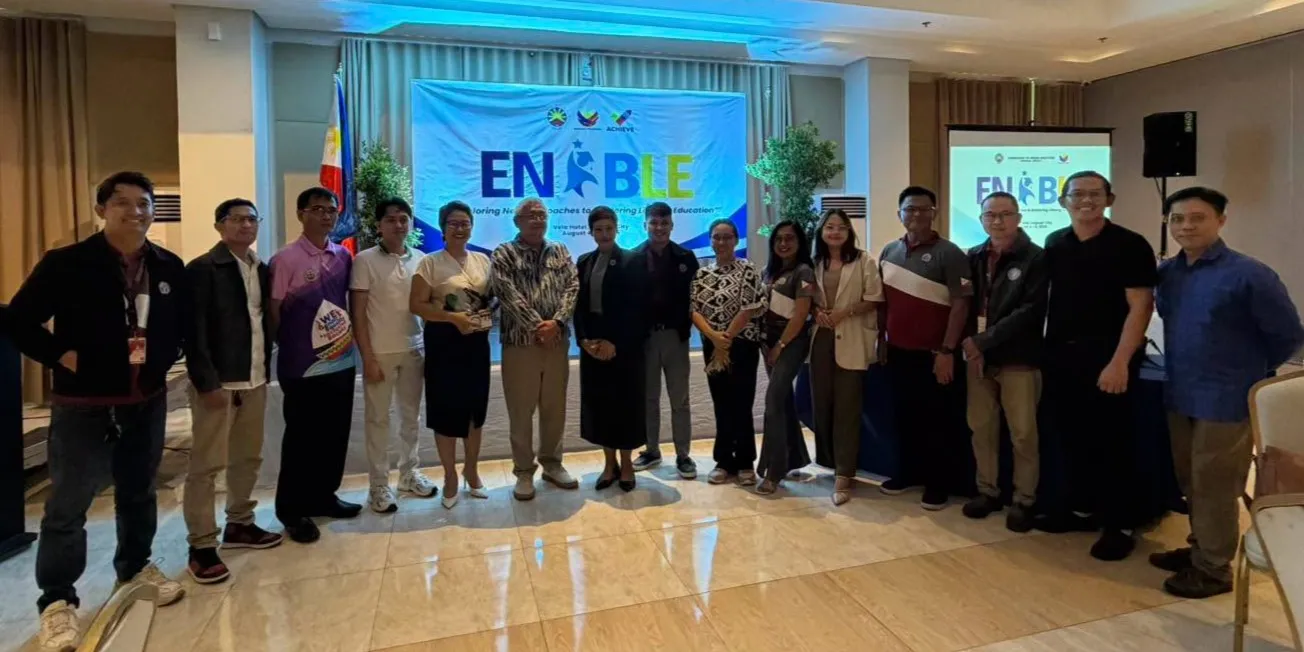
On July 23, 2026, inside the School of Advanced Studies Defense Room at Saint Louis College in San Fernando City, La Union, Mr. John Philip S. Parmisano sat for his final evaluation as a candidate for the Bachelor of Science in Office Administration under ETEEAP. It sounds like a small, local event, and in one sense it is. But it is also exactly the kind of moment the law was built for.
CHED Regional Office I did not simply approve the assessment from a desk somewhere. Education Supervisors II Gio Albert A. Cruz and Joy Ann L. Gurtiza sat in on the proceedings themselves. That is not a courtesy visit. Under the law that governs the program, CHED is tasked with monitoring and evaluating how deputized schools carry out ETEEAP, using standardized tools the Commission itself develops. Having supervisors physically present for a candidate’s final defense is that mandate in practice, not just in writing.
The panel Saint Louis College convened reflects how the assessment process is supposed to work under the current eligibility framework. Dr. Caroline G. Pajimola, Dean of the College of Business and Accountancy and the school’s ETEEAP Coordinator, led a group that included the BSOA Program Head, a faculty member from the same program, and, notably, someone from outside the academe entirely: Mr. Dan Dreb G. Flores, a store manager at SM La Union. That mix of internal and external assessors is not incidental. The law requires a panel made up of both academic experts and industry practitioners, precisely so that a candidate’s real-world competence gets weighed by people who actually work in the field, not only by professors reading a portfolio.
What the panel evaluated also lines up with the layered assessment model built into the program: mastery of Office Administration competencies, how the candidate applied professional experience on the job, any supplementary learning he had picked up along the way, and how he handled himself under pressure, including his critical thinking, problem-solving, professionalism, and communication during the defense itself. This is the oral defense and portfolio evaluation stage that every ETEEAP candidate eventually has to go through, and it is rarely as simple as filling out a form.
The result: a recommendation to PASS. CHED’s supervisors also had good things to say about the school itself, commending Saint Louis College for sticking to the required ETEEAP protocols and for keeping the pathway open to working professionals who want to finish a degree without stepping away from their jobs. If you are curious whether your own school is authorized to run this kind of assessment, the Accredited Schools Directory on ETEEAP.PH lists Saint Louis College along with other deputized institutions across the country.
Two Days in Calasiao: CHED RO1’s Lifelong Learning Summit
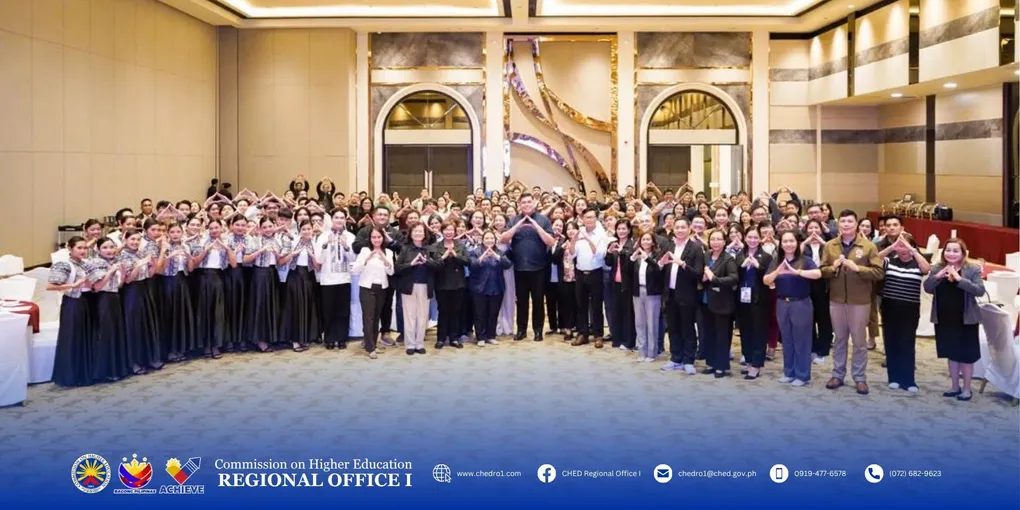
While one candidate was defending his portfolio in La Union, a different kind of work was happening about two hours south. On July 28 and 29, 2026, CHED Regional Office I held its Lifelong Learning Summit in Calasiao, Pangasinan, and this one was not about a single applicant. It was about building the infrastructure that makes applicants like Mr. Parmisano possible in the first place.
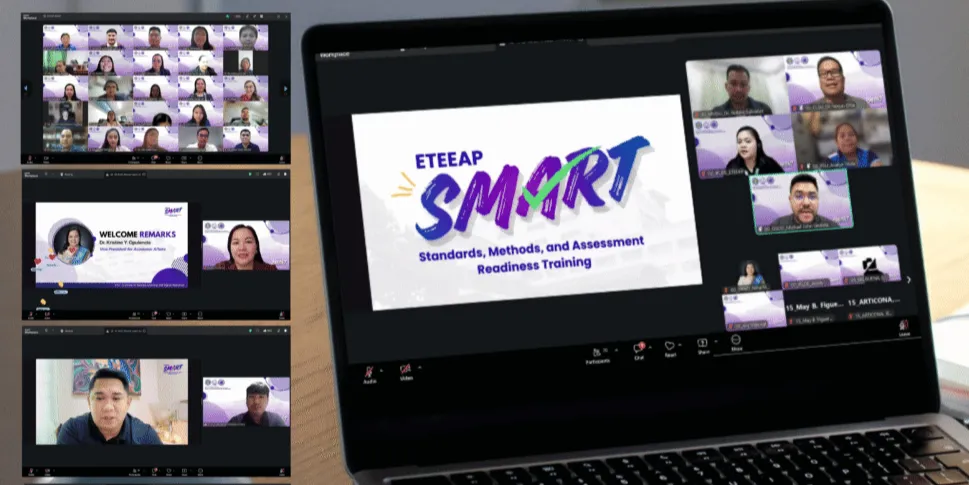
The second day of the summit, held on July 29, centered on a hands-on workshop facilitated by Dr. Melquiades C. Ancheta, Chief of the Non-Conventional Higher Education Division, and Dr. Ninia Inoncillo-Calaca, a member of the Technical Panel for Open Distance and e-Learning. Forty participants from thirteen Higher Education Institutions across the Ilocos Region showed up, all of them working on the same problem from different angles: how to get more schools ready to offer both ODeL and ETEEAP.
That pairing of ODeL and ETEEAP is not a coincidence either. Under the current implementing rules, schools that want to run ETEEAP through Open Distance and e-Learning modalities need a separate authority from CHED before they can do it. Bundling the two into one summit makes sense when you consider how many ETEEAP candidates are working adults or OFWs who need flexible, remote-friendly ways to complete their competency enrichment requirements.
CHED RO1 Director Dr. Cherrie Melanie Ancheta-Diego, CESO III, was direct about what the region still needs to build. “One of our deliverables is that we need to come up with a lifelong learning framework and the other is to establish a Regional Lifelong Learning Advisory Council,” she said in her opening remarks. She also pushed the group to think beyond the summit room itself. “Our advocacy must be very strong, through social media, television, radio, and, most importantly, through our schools,” she added.
That last point matters more than it might seem. A lot of qualified professionals in the region likely have no idea ETEEAP exists, or assume it is only for people with connections to a particular university. A regional framework and an advisory council will not fix that awareness gap by themselves, but they are the kind of scaffolding that makes wider outreach possible down the line.
A Lawmaker Weighs In: Rep. Acidre’s Challenge to Region 1
The first day of the summit, July 28, brought a guest who had a hand in writing the law everyone in the room was implementing. Hon. Rep. Jude A. Acidre attended and used the moment to press Higher Education Institutions in the region to move faster on alternative learning platforms.
Rep. Acidre is not a casual observer of this program. He chairs the House Committee on Technical and Higher Education, co-chairs the Second Congressional Commission on Education, and was one of the authors of House Bill 9015, the measure that eventually became Republic Act No. 12124. President Ferdinand R. Marcos Jr. signed that law on March 3, 2025, formally institutionalizing ETEEAP as a permanent pathway rather than a program running on an executive order from three decades earlier.
His message to the room in Calasiao was less about celebrating what already exists and more about closing the gap between the law’s ambition and what is actually available on the ground. Lifelong learning, he argued, is essential if Filipinos are going to keep up with a labor market that keeps shifting underneath them, and HEIs have a real role to play in making quality education reachable for working professionals, adult learners, and anyone trying to climb further in their career without starting from zero.
The numbers he was working with give some sense of why he was pushing. Region 1 currently has twelve deputized HEIs offering ETEEAP and four recognized to offer ODeL, a list you can review in more detail through the region’s recent program re-certification coverage. CHED RO1 is processing more applications from other schools hoping to join that list. Twelve is not nothing, but for an entire region, it also is not the ceiling. Rep. Acidre’s presence at the summit was a fairly pointed reminder that Congress expects that number to keep climbing.
What These Three Stories Add Up To
Taken separately, these are three modest local items: one candidate, one summit, one visiting lawmaker. Taken together, they show a program moving through its full life cycle in real time, from the ground level all the way up to policy oversight.
At Saint Louis College, you see the law working exactly as intended for an individual: a panel weighing real competence, CHED supervisors watching to make sure the process holds up, and a working professional inching closer to a degree he has effectively already earned through years on the job. In Calasiao, you see the institutional side, the unglamorous work of building frameworks, councils, and staff capacity so that more schools can eventually run assessments like the one in La Union. And with Rep. Acidre’s remarks, you see the political will behind it all, a reminder that this program has legislative backers who are watching regional numbers and expecting growth.
None of this happens without the basic eligibility rules staying consistent no matter which region you are in. A candidate still needs to be a Filipino citizen, at least 23 years old, a high school graduate or PEPT or ALS passer, and someone with at least five cumulative years of work experience related to the degree being sought. Those requirements have not changed. What is changing is how many schools in places like Ilocos Norte, Ilocos Sur, La Union, and Pangasinan are actually equipped to run the assessment once someone applies.
Thinking About Applying? Here Is Where to Start
If Mr. Parmisano’s story sounds a little too familiar, the years of experience, the work you know you could put to the test, but no diploma to show for it, this is your sign that the pathway is active and being taken seriously by the people who oversee it. Region 1 alone now has a dozen deputized schools and a regional office actively expanding both ETEEAP and ODeL capacity.
Start by checking whether you meet the baseline requirements on our eligibility page, then browse the full directory of accredited schools to see which institutions near you, or anywhere in the country if you are open to a remote or blended option, offer the program you are after. You can also take a shortcut through our quick eligibility check if you would rather get a fast read on where you stand before diving into paperwork.
Whatever you decide, know that the panel Mr. Parmisano faced, the summit in Calasiao, and the congressman pushing for more access all point in the same direction: this program is not slowing down, and neither should you.
Photo Credit: CHED Regional Office I - Ilocos Region