CHED CALABARZON's Lifelong Learning Caravan 2026 Puts ETEEAP in the Spotlight
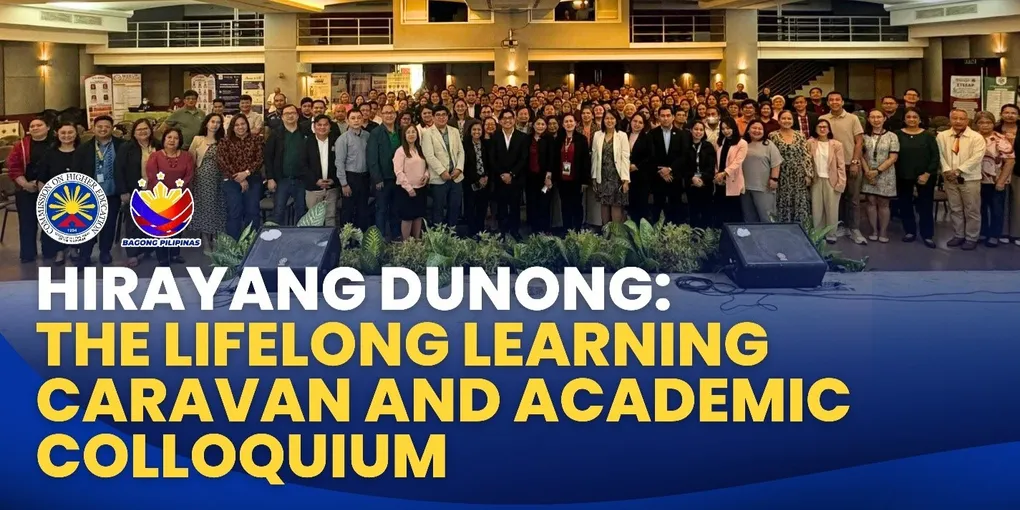
On May 26, 2026, the Commission on Higher Education Regional Office IV-A (CHED CALABARZON) successfully launched the Hirayang Dunong: Lifelong Learning (LLL) Caravan and Academic Colloquium 2026 at Lyceum of the Philippines University Cavite. The event was held in support of the “A” in the ACHIEVE Agenda, which stands for Accessible Lifelong Learning, and it served as a timely reminder that education does not have to stop when a career begins.
For thousands of working Filipinos who never had the chance to finish college, or who built their expertise entirely on the job, events like this one carry real weight. ETEEAP took center stage as one of the primary pathways being promoted, and the stories shared that day made a compelling case for why the program deserves far more attention than it typically gets.
What the Caravan Was All About
The Lifelong Learning Caravan was designed to do three things: educate the public on what lifelong learning means in practical terms, highlight how higher education institutions can make that learning more accessible, and connect aspiring learners with concrete programs they can actually pursue.
Dr. Jimmy G. Catanes, CESE, Director IV of the CHED Office of Programs and Standards Development, led the main presentation on lifelong learning initiatives. His discussion covered three key programs: the Expanded Tertiary Education Equivalency and Accreditation Program (ETEEAP), Microcredentialing, and Open and Distance Learning. He walked participants through how these programs are operationalized and what procedural guidelines govern their implementation.
What made the event especially informative was the panel discussion that followed, where representatives from three deputized institutions shared their real-world experiences in delivering lifelong learning programs.
Schools Sharing Best Practices
Dr. Claudette Ayala of Manuel S. Enverga University Foundation (MSEUF), Dr. Allan Santillana of the University of Batangas (UB), and Mr. Arniel Belaniso of LPU Cavite each took the floor to share how their respective institutions have been implementing ETEEAP and other flexible learning modalities. Dr. Catanes joined them in the discussion, making it a rich, multi-perspective conversation on the challenges and successes of running these programs at the ground level.
Dr. Mark Celis, Vice President for Academics of LPU Cavite and a CHED ETEEAP assessor, also shared his perspective on quality assurance in lifelong learning modalities. This is an important point that often gets overlooked in public conversations about ETEEAP. The program is not a shortcut. Every graduate goes through a rigorous competency-based assessment that maps their professional experience against an actual degree curriculum. Schools that take quality assurance seriously are the ones producing graduates whose credentials hold up in the real world.
You can learn more about how this assessment process works on the How ETEEAP Works page.
ETEEAP Booths and On-Site Information
Four CHED-deputized institutions set up ETEEAP booths at the event: Manuel S. Enverga University Foundation, University of Batangas, Lyceum of the Philippines University Cavite, and Lyceum of the Philippines University Batangas. Visitors had the chance to speak directly with school representatives, ask about specific programs, and get a clearer picture of what the application process looks like.
If you were not able to attend in person, the Accredited Schools page on ETEEAP.PH provides a searchable list of CHED-deputized institutions where you can begin your own research.
The Part That Actually Moves People: The Graduate Stories
No amount of policy discussion hits as hard as a real person standing up and saying, “This is what ETEEAP did for my life.” Four graduates shared their stories at the caravan, and each one illustrated a different dimension of what the program makes possible.
Atty. John August Vianney D. Guesse completed his BSBA degree through ETEEAP in 2018 and now works at the City Legal Office of Batangas City. His story is a strong example of how completing a degree through ETEEAP can serve as a foundation for further professional development, not just a career endpoint.
Ms. Lisa Fiona S. Patron, now an Assistant Manager at ProLife UK, represents the OFW community that ETEEAP has always been particularly well-suited to serve. Working abroad does not have to mean putting your educational goals on permanent hold.
Dr. Allan D. Santillan, now an Assistant Professor at the University of Batangas, is perhaps the most striking example of the program’s long-term impact. He went from completing a degree through ETEEAP to building an academic career and eventually sharing his insights at events like this very caravan.
Mr. Redel John Salazar, now an Accounts Manager at Amazon Global, demonstrates how ETEEAP credentials hold up in highly competitive, international corporate environments.
These are not exceptional edge cases. They reflect the kind of career trajectories that become available once the credential barrier is removed. If you want to explore whether your own background could put you on a similar path, the Get Started page has a quick eligibility checker that can give you a practical first assessment.
Why This Caravan Matters for the Broader ETEEAP Conversation
Events like the Hirayang Dunong Caravan serve a function beyond just promoting specific programs. They normalize the idea that education happens throughout a person’s life, not just during the years between 18 and 22. For a country where a significant portion of the workforce has relevant, documented professional experience but no formal degree to show for it, that normalization matters enormously.
ETEEAP is now institutionalized under Republic Act No. 12124, which means it is no longer dependent on shifting policy priorities. It has dedicated funding, modernized guidelines, and a growing network of deputized institutions. The ACHIEVE Agenda’s emphasis on Accessible Lifelong Learning is pushing regional offices like CHED CALABARZON to actively bring this information to the people who need it most.
For anyone who has spent years building expertise in their field and wondering whether a degree is still within reach, the answer has never been more clearly yes. The Programs directory on ETEEAP.PH can help you see what degree options are currently available through deputized institutions.
Taking the Next Step
The Lifelong Learning Caravan is a reminder that the institutions, the legal framework, and the success stories are already in place. What remains is for working professionals across the country to take that first step toward finding out whether ETEEAP is right for them.
Start by checking your eligibility, researching the accredited schools in your region, and reviewing the FAQs to understand what the process actually involves. The path forward is clearer than it has ever been.