When Agriculture Pulls Up a Chair: ATI Davao Region at the ETEEAP Industry-Government Forum
Most people associate ETEEAP with office workers, OFWs, and mid-career professionals in the city. But on June 18, 2026, at Acacia Hotel in Davao City, a representative from the Agricultural Training Institute (ATI) Davao Region walked into the same room as CHED officials, labor agencies, and higher education institutions to talk about the future of workforce-responsive education in the region. That detail is easy to miss if you’re just skimming a press release.
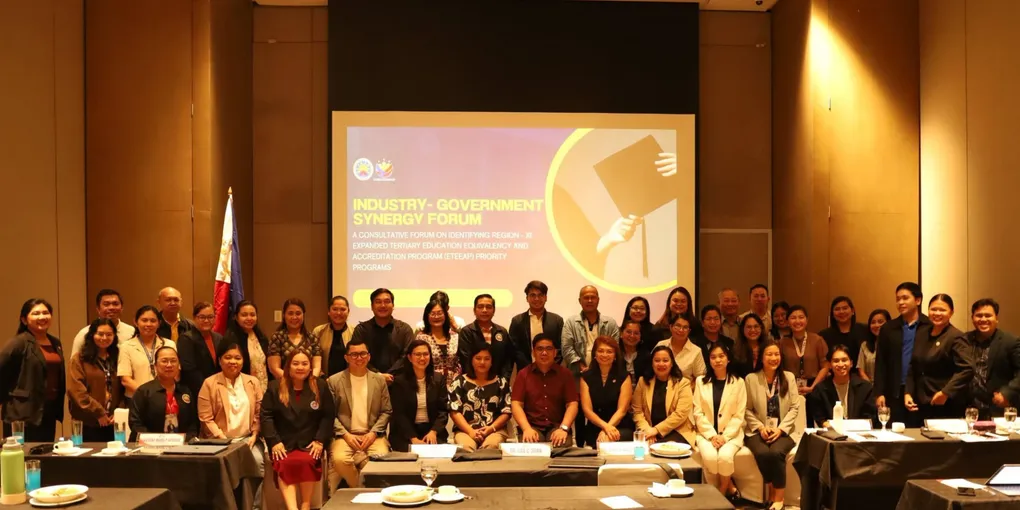
The event was the Industry-Government Synergy Forum on the Expanded Tertiary Education Equivalency and Accreditation Program, organized by the Commission on Higher Education Regional Office XI (CHED RO XI). Around 50 participants gathered to flesh out how Republic Act No. 12124, the law that formally institutionalized ETEEAP, could be made to actually work for Davao’s specific workforce and economic landscape.
ATI Davao Region was represented by Information Officer II Assel M. Mapayo. It’s one name, one agency, one seat in a room of 50. But the fact that an agricultural training body was at the table at all says something worth paying attention to.
In this article
- What ATI Davao Region Actually Does
- Why Their Presence at an ETEEAP Forum Matters
- What the Forum Covered
- What RA 12124 Requires from Inter-Agency Coordination
- What This Could Mean for Agriculture Professionals in Region XI
What ATI Davao Region Actually Does
The Agricultural Training Institute is the Department of Agriculture’s arm for human resource development. In simple terms, they train people in the agriculture sector. Farmers, fisherfolk, agricultural technicians, extension workers, rural entrepreneurs. The kind of professionals who often spend years, sometimes decades, developing deep expertise in the field without any formal credential attached to that knowledge.
That’s a population ETEEAP was designed for. The program exists precisely to recognize what people know and can do, whether they learned it in a classroom or on a farm. If you’ve spent five years in an agriculture-related role and meet the other basic requirements, you could already be a candidate. The eligibility requirements for ETEEAP are worth checking if you haven’t yet.
Why Their Presence at an ETEEAP Forum Matters
Here’s the thing about ETEEAP: what programs get offered in a particular region isn’t decided by one person in a Manila office. Under RA 12124, CHED is supposed to work with agencies like the Department of Education, TESDA, the Department of Labor and Employment, and other relevant government bodies to identify which degree programs are genuinely in demand or needed in a region before prioritizing them for ETEEAP implementation.
ATI’s participation in the Davao forum fits that mandate. They bring ground-level intelligence about what agriculture sector workers need, what skills they already have, and what formal qualifications might actually serve them in their careers. That’s not background information. It’s the kind of data that should shape which ETEEAP programs get greenlit in Region XI.
The forum’s organizer, CHED RO XI, was explicit about its purpose: to identify priority academic programs that respond to the workforce and economic development needs of the region. Agriculture is central to Davao’s economy. Davao del Sur, Compostela Valley, and the surrounding provinces run on it. Having ATI at the table when those priority programs are being discussed isn’t ceremonial. It’s the right call.
You can read more about how the forum unfolded and who else participated in the full event coverage on ETEEAP.PH.
What the Forum Covered
Dr. Jimmy G. Catanes, CESE, Director IV of the CHED Office of Programs and Standards Development (OPSD), delivered a message of support to open the session. His remarks focused on ETEEAP’s role in lifelong learning, workforce competitiveness, and the recognition of prior learning as a legitimate pathway to academic advancement.
After that, the forum moved into presentations from key government agencies. Representatives from the Department of Migrant Workers (DMW) discussed opportunities tied to OFW re-integration and credential recognition. TESDA specialists from the RTC-KPVTC Davao weighed in on technical-vocational education and how it connects to the ETEEAP pathway. And DOLE XI contributed labor market data, skills demand trends, and insights on what the regional economy actually needs from its workforce right now.
The conversation was practical. Which programs have unfilled demand? Which sectors have large numbers of experienced workers who lack formal credentials? Where does the skills mismatch actually live in Region XI? Those are the kinds of questions that forums like this one are supposed to answer before CHED makes decisions about deputizing schools and expanding program offerings.
What RA 12124 Requires from Inter-Agency Coordination
This isn’t just good practice. It’s baked into the law. Republic Act No. 12124, which President Marcos signed into law in March 2025, specifically directs CHED to work with DepEd, TESDA, DOLE, and other relevant agencies in identifying priority programs that are most in-demand or needed for ETEEAP purposes. The IRR issued by CHED in June 2025 goes even further, requiring that any program a deputized HEI intends to offer through ETEEAP be backed by proof that it aligns with the region’s identified needs, as endorsed by those same agencies.
In other words, what happened in that room at Acacia Hotel on June 18 wasn’t optional. It’s the mechanism the law created to make sure ETEEAP programs are worth something to the people who complete them. Degrees that don’t connect to real regional demand serve no one. This forum was part of fixing that.
If you want a deeper look at what ETEEAP is and what the law actually says about how it works, the program overview on ETEEAP.PH lays it out in plain language.
What This Could Mean for Agriculture Professionals in Region XI
This is where it gets relevant if you work in the agriculture sector and have been thinking about going back to school.
ETEEAP allows qualified individuals to earn a bachelor’s degree by having their work experience, training, and prior learning assessed for academic equivalency. The minimum requirements are at least 23 years old, a high school diploma or its equivalent, and at least five years of work experience in an industry related to the degree program they’re applying for. Many agricultural workers and extension professionals in Davao would meet those thresholds.
The question has always been whether the right programs are available at a deputized school in the region. That’s where forums like this one come in. ATI Davao Region’s presence signals that agriculture-linked learning pathways are at least part of the conversation. Whether that leads to specific programs being prioritized in Region XI over the coming months is something we’ll be watching. For now, the groundwork is being laid.
If you’re in the agriculture sector and want to understand whether ETEEAP could work for you, the first step is checking your eligibility. From there, you can browse CHED-deputized schools to see which institutions in or near Region XI are authorized to offer programs through ETEEAP, and explore the available programs to see what degrees are currently on offer.
ETEEAP is a long game. One forum doesn’t unlock a degree. But it does move the program closer to the workers who need it most, including the ones who have spent their careers growing food, training farmers, and building agricultural communities in Mindanao. That’s worth covering.
Ready to find out if you qualify? Check your eligibility now and take the first step toward turning your years of experience into a recognized college degree.